


Invoice Fraud Prevention for Small Businesses in 2026: A Simple Payment Check
A bill may look real but still be a scam. A fraudster may use the name of a firm you know. They may send a note that says the bank account has changed. They may ask you to pay at once. A small team can lose a lot from one bad transfer.
You can cut this risk with a few clear steps. The aim is to check who sent the bill, what was bought, and where the cash will go. Do not rely on the email alone. This guide shows a plain process that can work for small firms in many places.
Know how fake bills work
A scam may start with a fake new bill. Or it may use a real bill but change the bank details. A bad actor may get into a vendor email account and send a note from a real address. That can make the request look safe.
Some scams use pressure. The note may say the work will stop unless you pay today. It may say the boss has approved the transfer. Do not treat an urgent tone as proof. Pause and check.
Watch for a new bank account
A new bank account is a key warning sign. A real vendor may change banks, but you should check the change through a phone number you already trust. Do not call the new number shown in the email. That number may lead back to the scammer.
Save the result of the call in your bill notes. If the vendor has a set portal, use the safe way it offers to check bank details.
Match the bill to real work
Check if your firm bought the goods or service. Look for a purchase order, work note, or signed deal. Match the vendor name, item, date, and price. If no one knows the order, do not pay just to clear the inbox.
Ask the staff member who ordered the work to confirm it. For a large bill, use a second person to approve payment. A small pause can stop a large loss.
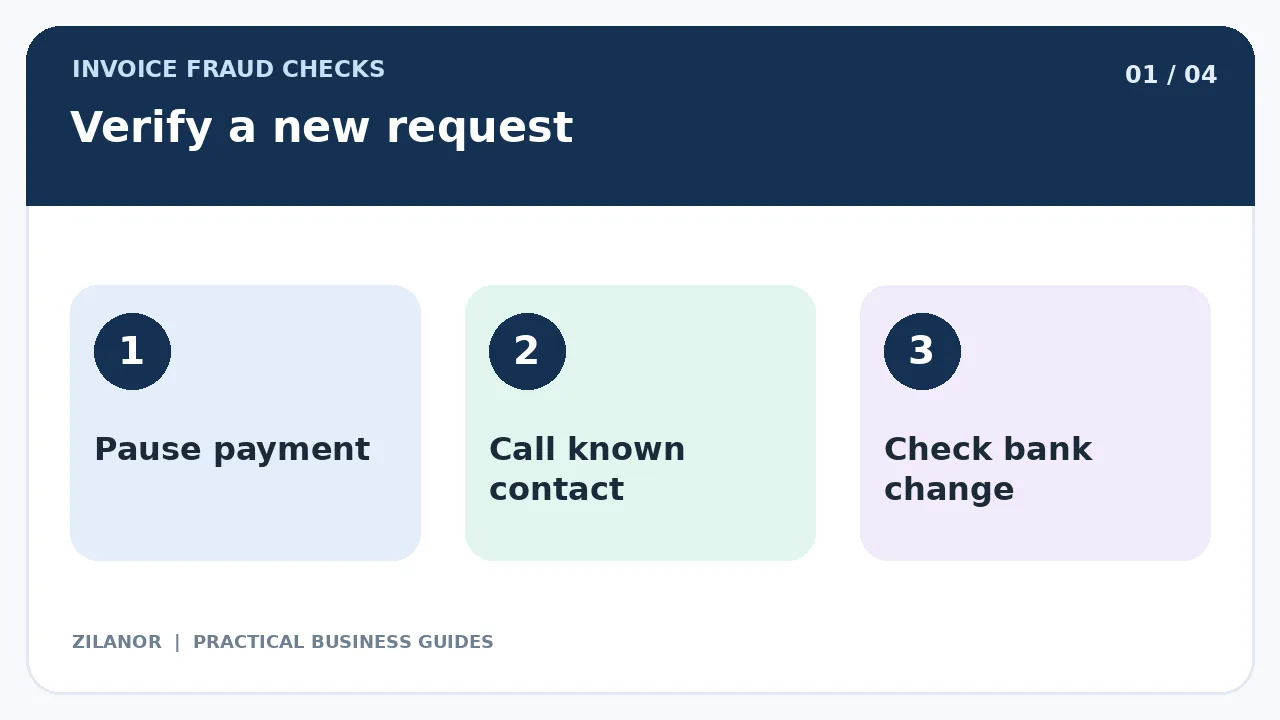
Check the bill fields
Look at the bill number, due date, bank details, and tax fields where they apply. A typo alone does not prove fraud. But a new bank, a new payee, and a rush request together should lead to a full check.
Keep the original bill file. Do not edit it to make it look right. Ask the vendor to send a clear new bill if the old one has a real error.
Use a two-person payment check
One person may enter a bill. Another may approve the cash move. This helps when a scammer tries to rush one worker. Set a limit for when a second check is needed. The right limit will depend on your firm’s size and risk.
Write the rule in a short guide. Name a backup approver for days when the owner is away. Do not let staff use another person’s login just to get a bill paid.
Keep the payment list safe
Your bank and vendor details should live in a safe system. Limit who can change them. Keep a log of any change. A worker who can add a new bank account should not always be the one who can send cash to it.
Use strong sign-in tools. Remove old staff access when roles change. Check links with your bill app and bank. A weak login can turn a real bill flow into a scam path.
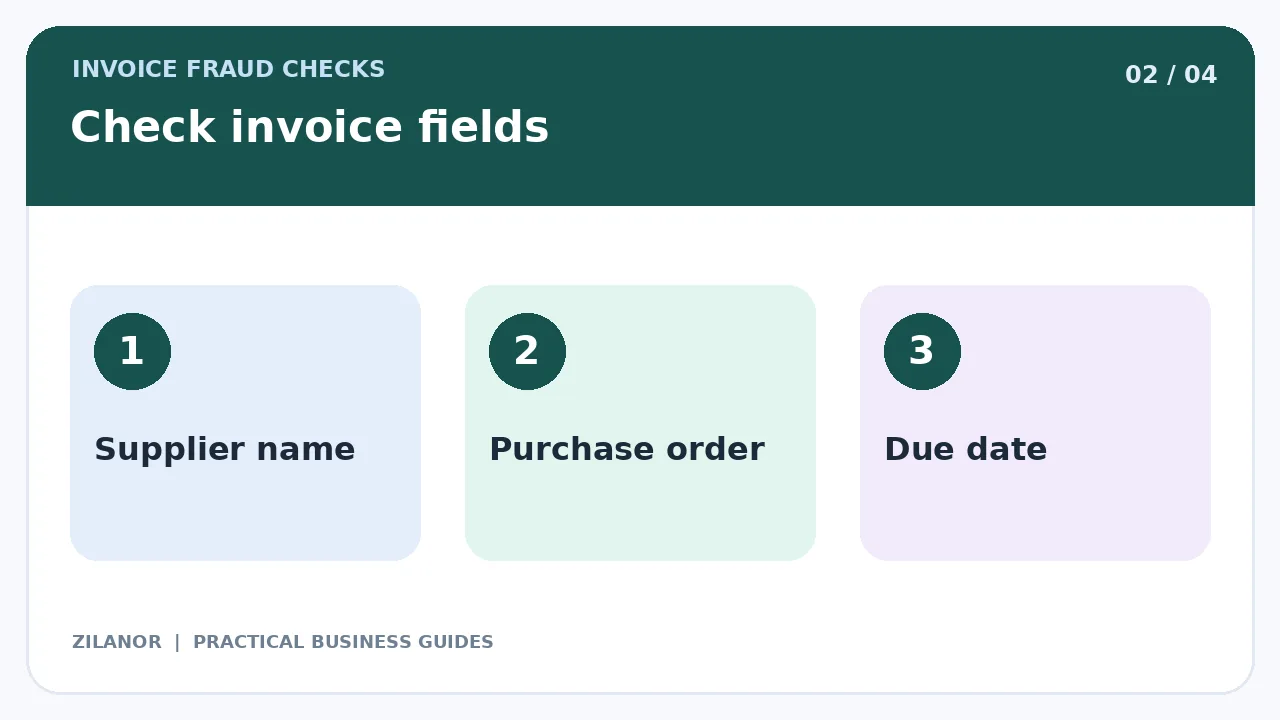
Verify a change by a trusted route
Call the vendor on a number you used before. Or use the number on an old signed deal or the vendor’s own site, after you check that it is the real site. Do not use only the contact data in the new request.
Ask a clear question: “Did your bank details change, and should we use this new account?” Do not read out a full bank number before the vendor confirms who they are. Record who you spoke with and the time.
Do not trust a reply in the same email chain
If a scammer has the email account, they can reply in the same thread. A long chain with old mail is not proof. A phone call or safe vendor portal can give you a second path to check the change.
Teach staff that a check is not rude. A real vendor should know why a buyer wants to guard funds. Keep the tone calm and clear.
Set a rule for urgent bills
A rush request should not skip checks. Make a short rule for it. Who can approve a rush bill? How will you check the vendor? What is the safe path if the owner is away? Write the steps so staff do not have to guess.
Fraudsters often try to make people feel they have no time. Tell the team that a safe pause is allowed. A late bill may cause a fee, but a wrong bank transfer may be far worse.
Train with fake scam cases
Use sample emails with no real bank data. Show one with a new payee, one with a fake boss note, and one with a bill for goods no one ordered. Ask staff what they would check. Then review the safe steps.
Do not shame people for a wrong guess. Use the test to find weak rules. Add clear examples to your guide. Run a short check when new staff join.
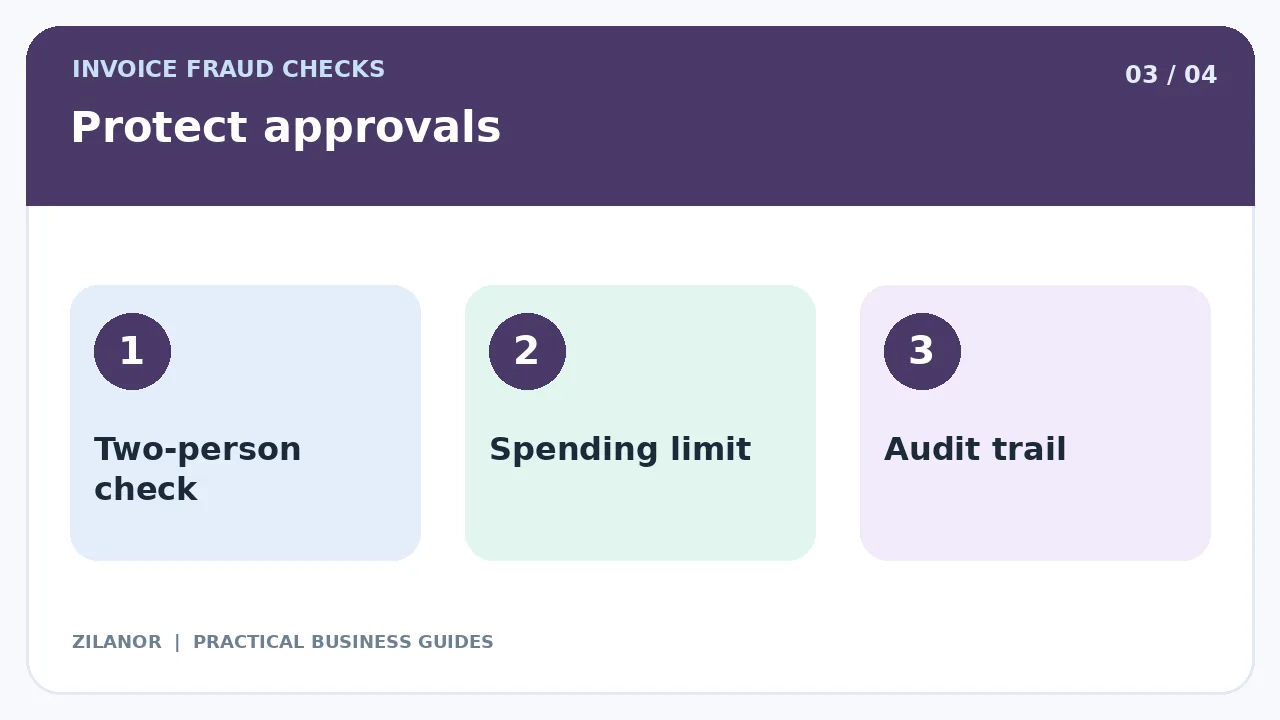
What to do if you sent cash to a scammer
Act fast. Call your bank or payment firm through a trusted route. Say you think a transfer was a scam. Ask what steps may help stop or trace the funds. Keep the bill, email, call notes, and payment record.
Tell the right manager and tech lead. If an account may have been hacked, secure it with expert help. Change exposed passwords and review access. Report the crime through the right route for your country.
Do not delete the email or hide the error. Good records may help the bank and law teams. A quick, calm response can be more useful than blame.
Example: a small web agency
An agency works with a design vendor each month. A new email says the vendor has changed banks. It asks for the next bill to go to a new account today. The note has the real vendor name and an old bill number.
The agency’s pay rule says new bank details need a phone check. A staff member calls the vendor on a number from the old deal. The vendor says no change was made. The agency stops the payment and saves the scam note.
The team then checks the email route and warns staff. The simple second check saved the firm from a bad transfer.
Review bills each month
Pick a few paid bills and check that the order, approval, and bank details match. Look for rushed payments and new payees. Ask whether staff followed the rule. Fix gaps in the process.
Keep the audit small enough to do each month. A clear habit can work better than a large plan no one uses. Check rules again when the team or bank tool changes.
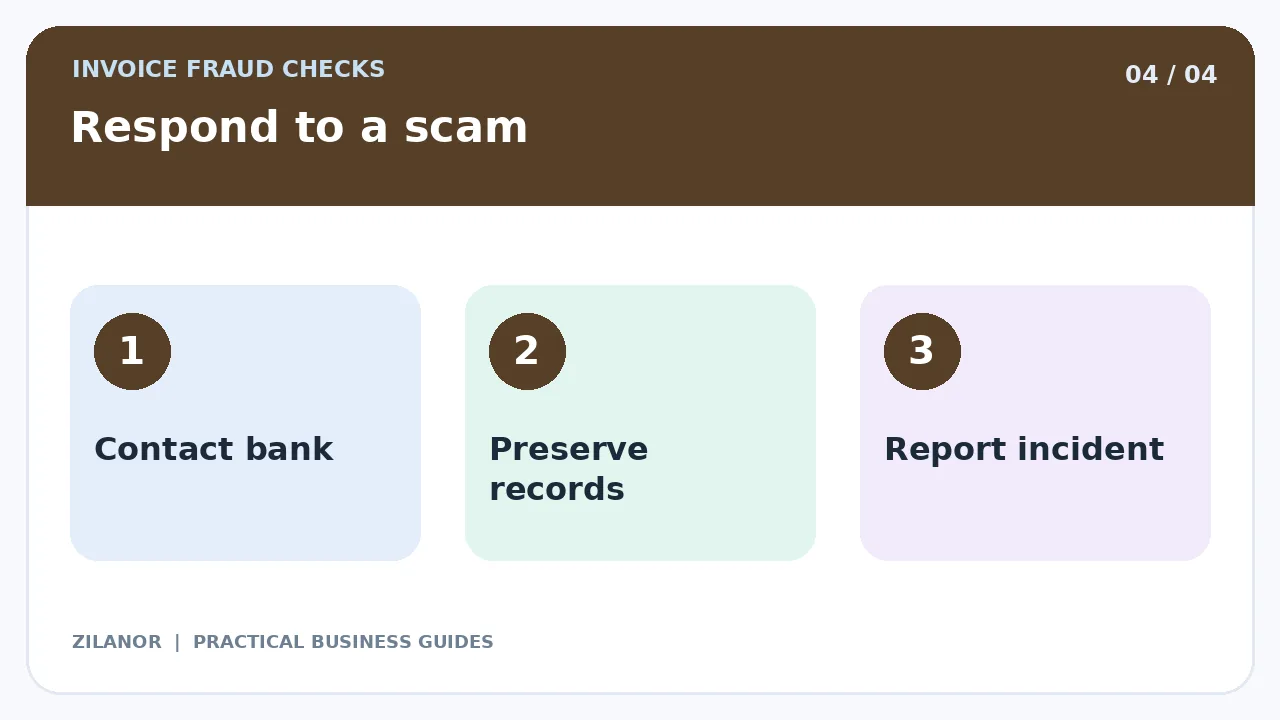
Quick checklist
- Match each bill to real work.
- Call a trusted number for bank changes.
- Use a second check for key payments.
- Keep bank and app access safe.
- Act fast if a scam payment goes out.
Common questions
Does a real sender email mean the bill is safe?
No. A real account may be hacked. Check new bank details by another route.
Should every small bill need two people?
Set a rule that fits the risk and cost. A second check is key for new payees and large or odd payments.
What if the vendor is hard to reach?
Hold the bank change until you can check it. Use a safe contact route you trust.
Sources
See FTC tips for small firms on scams and safe accounts. Check your bank’s current fraud guide and the report path for your country.


Pingback: Cross-Border Payments for Small Businesses: 2026 Cost Guide