
Inventory Shrinkage for Small Retailers: Find Losses Before They Grow
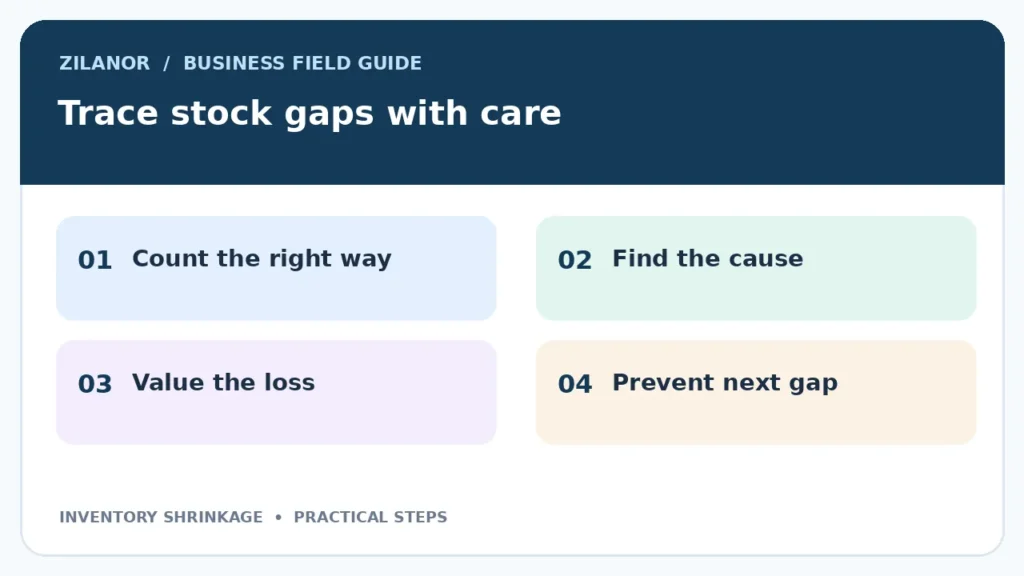
A shop’s stock system may say there are forty units on a shelf. A count finds thirty-six. The gap is called shrinkage, but the name does not tell you the cause. Goods can be lost through damage, a bad receipt, a wrong sale code, a return error or theft. Treating every gap as theft can harm staff trust and leave the real process fault unfixed.
This guide shows small shops how to find, count and reduce stock gaps. It works for a local store and for a brand with several outlets. It does not assume that one country’s tax or accounting rules apply elsewhere. Ask an adviser how to record write-offs in your own market.
Start with a clean stock count
Make the count fair and repeatable
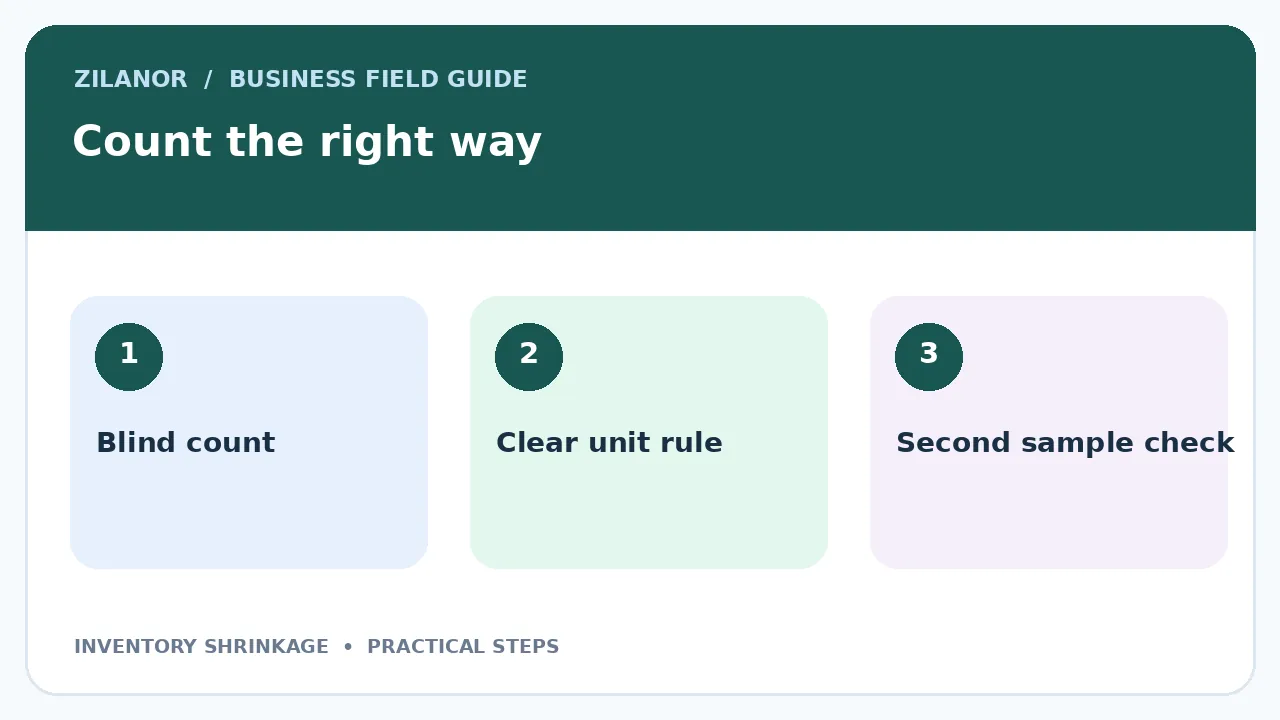
Choose a quiet time. Freeze stock moves for a short count window or record each move as it happens. Give counters a clear shelf map and a unit rule. A case of twelve should not be entered as twelve cases. Mark damaged goods apart from sale-ready stock.
Use two people for costly or high-risk items. The second person can check a sample or the full count where practical. Ask counters to record what they see rather than copy the system number. A blind count helps stop a wrong balance from shaping the answer.
A small pet store may count food by bags and treats by packs. If staff mix packs with single items, the stock gap looks much larger than it is. Write the unit next to each item and keep it the same in the supplier order, sale screen and count sheet.
Check the five most common causes
Look for data errors before blame
Start with the last delivery. Was the quantity entered when the goods arrived? Did someone scan the wrong item code? Check returns and refunds. A customer may have brought back a product that was never put into saleable stock. Check damage, samples and staff use where the rules allow it.
Then look at transfers. If stock moved from one shelf or outlet to another, both sides must record it. A missing transfer can look like shrinkage in one place and extra stock in another. Match the transfer date, item and person who handled it.
Only after those checks should the shop review signs of theft. Use a fair process and follow local employment law. Do not accuse a worker based on one count gap. A pattern, a clear record and a sound review matter more than a guess.
Value the gap without hiding its size
Use a consistent cost basis
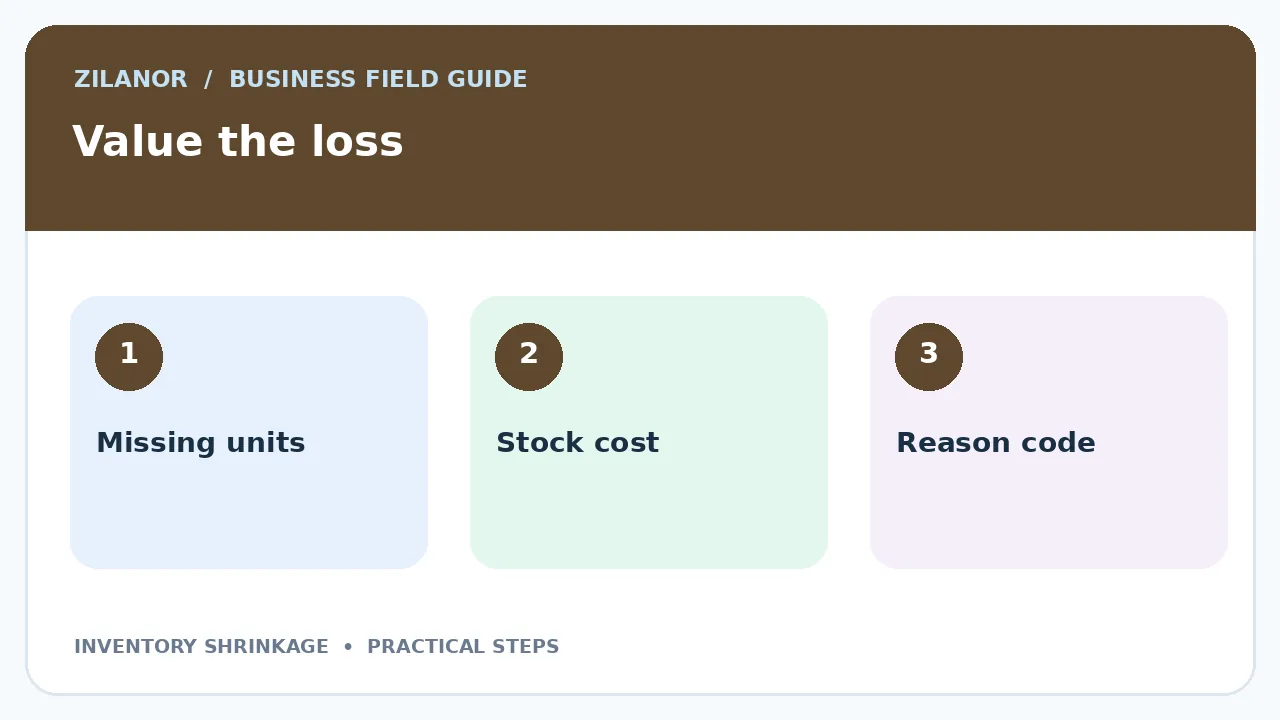
Measure the missing units first. Then work with the bookkeeper to value them using the method the business applies to stock. A retail price is not the same as the cost held in the books. If a shirt sells for 40 but costs 18, four missing shirts are not an inventory cost of 160 under a simple cost view.
Keep a record of the item, unit count, cost basis and reason code. Use an “unknown” code if the cause has not been found. Do not put every gap into one vague loss line. Clear codes help the owner decide whether to change a process.
The final accounting entry can vary by market and type of loss. Ask a qualified accountant before adjusting material balances. A good stock note supports that review and makes the next audit easier.

Use cycle counts instead of waiting all year
Count high-risk goods more often
A full shop count takes time. Cycle counting spreads the work across weeks. Put fast sellers, costly items and goods with past gaps at the top. Give each group a count rhythm. A shelf with frequent errors may need a weekly check, while a stable low-value line may need less.
Keep the plan small enough for staff to follow. It is better to count twenty high-risk products well than to claim a daily full count that never happens. Mark each check date and the person who did it. Review repeated gaps, not just the total.
For example, a phone repair shop keeps small parts in bins. One costly part is used each day. A short end-of-day count can show an error while staff still recall the job. A full count six months later may be too late to trace it.
Fix receiving before stock reaches the shelf
Match the order, delivery and goods
Do not mark a delivery complete based only on the supplier invoice. Count the boxes and check the items. Note short or damaged units before staff store them. Keep a photo or signed note where useful. Send a clear query to the supplier if the count does not match.
If a store has one worker receiving and selling, set a short check step during quiet hours. The worker should not need to do a long form for every small parcel. Use a simple record with purchase order, received units, exceptions and date.
When a supplier sends a substitute product, create the right item record before sale. Do not force it under a similar code just to save time. Wrong codes can make one product seem missing while another appears overstocked.
Make returns and damage visible
Separate good stock from goods that cannot be sold
A returned item may be unopened, damaged or missing parts. Put it in a clear state before it goes back to a shelf. If the store gives a refund but does not record the item state, the stock count can be wrong. Give staff a short path for each type of return.
Use a marked space for goods waiting on a check. Do not mix them with new stock. Ask a manager to decide whether an item can be sold, repaired or written off. Record that decision and the date. This avoids a pile of old goods that no one can explain.
Watch product expiry where it applies. Food and beauty goods may need batch or date controls. A saleable count is not just the number of packs in a room. It is the number that can be sold in line with product and safety rules.
Check the sale screen and item codes
Find mistakes that repeat at checkout
A cashier may scan a similar code or choose a quick key for a product with many sizes. That can distort the balance for both items. Compare sales by code with what the shop actually sold. If one code is rarely used while a similar code is very high, test the scan flow.
Print labels that are easy to read and scan. Do not place two codes where a scanner may hit the wrong one. Train new staff on items that look alike. Use a short guide with photos of common mix-ups. The goal is to make the correct action easy.
When a new product is added, test one sale in the register and verify the stock change. This small check can catch a setup issue before hundreds of orders go through.

Review loss without creating fear
Use process facts and fair controls
Give staff a safe way to report broken goods, missed scans and count errors. If every report leads to blame, people may hide a mistake. A clear, fair process brings errors into view earlier. Serious misconduct still needs the right review, but it should not be assumed from every gap.
Use role controls in the stock system. A worker who counts goods may not need the right to erase old records. Keep a record of adjustments and ask for a second check on large changes. Review access when staff leave or change roles.
Do not share detailed loss claims about named workers without proper evidence. Protect staff privacy and follow local rules. Good controls serve honest staff as well as the owner.
Build one useful monthly report
Track units, cost and causes
Show the start stock, expected stock, actual count and gap for the items checked. Add the value at cost and the reason where known. Use the same method each month so the trend makes sense. Note when a major count method changed.
Review the top five problem items and the top two causes. Give each fix an owner. If receiving errors caused the most gaps, test the new receiving check next month. If damage rose, look at packing, shelf space and handling.
A low shrinkage rate is good only if the count is sound. A shop that never counts may report no loss and still have weak records. Show the number of products checked beside the gap. That keeps the report honest.
A simple start for next week
Pick ten goods with high value or frequent stock gaps. Count them without looking at the system balance. Check the last receipt, sale, return and transfer for each mismatch. Write the most likely cause, but mark unknown where proof is thin. Fix one process issue and count again next week.
Shrinkage is not one mystery number. It is a signal that a stock path may be weak. A small, steady count and a fair review can protect cash, reduce waste and help staff trust the system.