
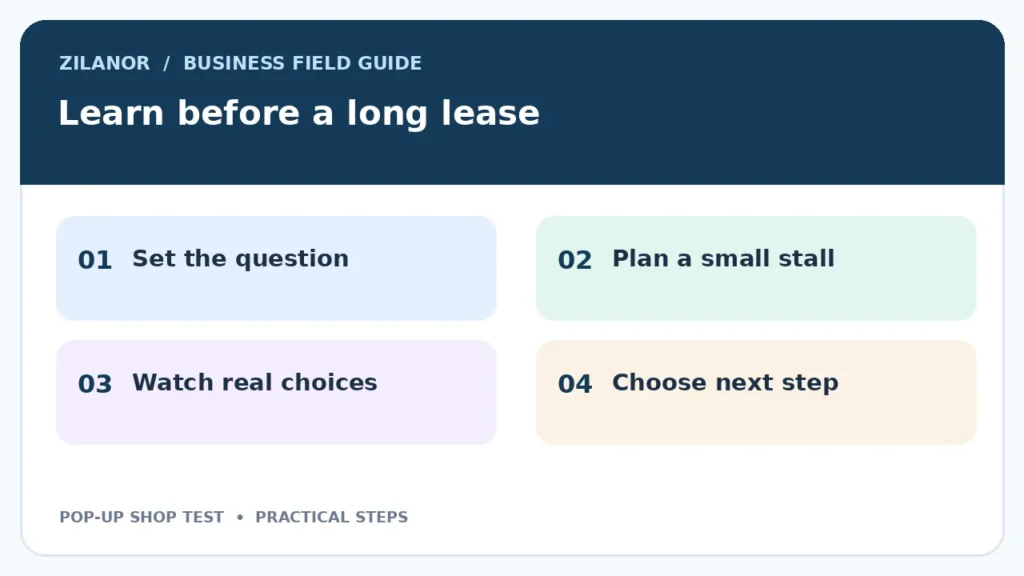

Test a Pop-Up Shop Before Signing a Long Retail Lease
A permanent shop can cost more than rent. It may need shelves, stock, staff, signs, power, insurance and many slow months before sales settle. A short pop-up can help a small brand learn what people buy in a real place before it takes that risk. Yet a busy pop-up does not always prove that a year-round store will work.
This guide shows how to plan a small, fair retail test. It is for makers, food brands, gift shops and online sellers who want to meet buyers in person. Local rules on permits, safety, tax and sales vary. Check them before you book a space.
Decide what the pop-up must teach you
Ask a question you can answer
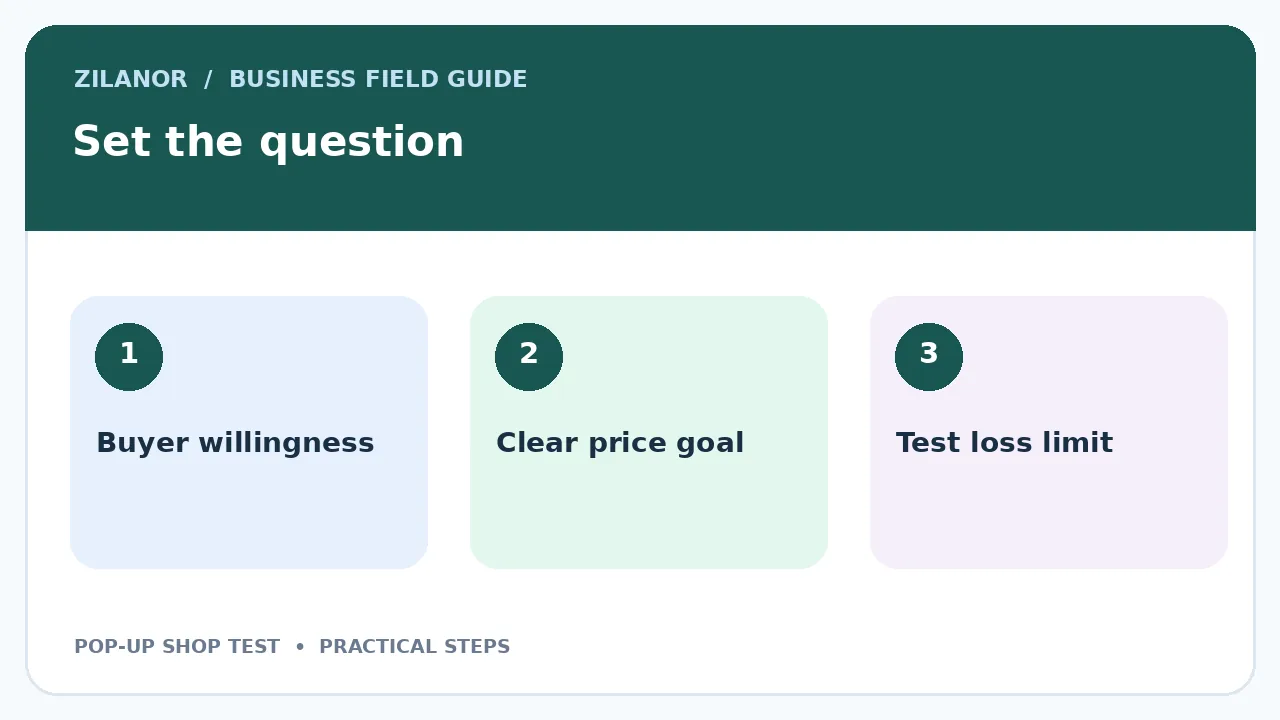
Start with one decision. You might want to know if people will pay the real price, which product size they prefer or whether they will come back. Do not try to learn everything in one weekend. A short test is most useful when it leads to a clear next step.
For example, a ceramic maker sells online and wants a high-street shop. The first test question could be whether enough buyers in that area will pay the current price for three core products. That is better than asking whether people “like the brand.” Praise does not pay rent.
Write down what result would change your mind. If the test cannot fail, it is not a test. A founder who says every sale proves success may miss the cost of staff time and unsold stock.
Choose a place that fits your buyers
Count the right people, not all foot traffic
A busy street is not always the right place. A craft brand may sell well at a design market but poorly beside a commuter station. Spend time near the site before booking. Note who passes, when the flow peaks and whether people stop at similar shops.
Ask the host about power, tables, internet, storage, access, loading rules and the hours you may trade. Visit in person if you can. A cheap space can become costly if you need to rent lights, pay for extra security or move stock every night.
Check that buyers with mobility needs can reach the stall and view the goods. Leave clear space around the display. Make prices easy to read. An attractive stand that blocks movement can hurt both access and sales.
Set a budget with a loss limit
Include all costs before the first sale
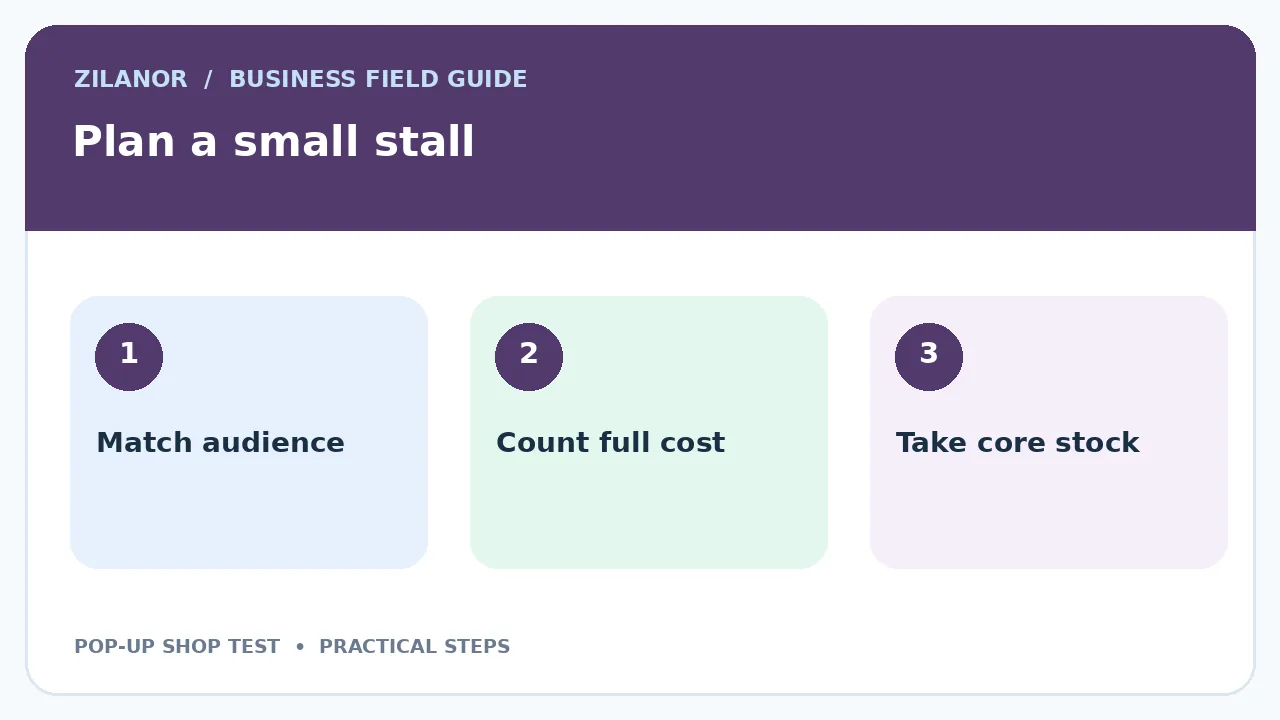
List site fee, transport, stock, packaging, card fees, staff, permits and insurance. Add the cost of display items you may not use again. Mark which costs are one-time and which repeat each day. This gives a more honest view than comparing sales with rent alone.
Set a maximum loss the firm can afford. A test should teach you without putting next month’s wages or supplier bills at risk. If the loss limit is too high, reduce the number of days, the stock range or the size of the site.
Use a simple break-even check. If a pop-up costs 600 in all and the firm keeps 15 after direct product costs from each typical sale, it needs forty such sales to cover that test cost. This is an example, not a market forecast. Use your own prices and margins.
Take a small product range
Make it easy to see what buyers choose
Bring core products, not every item in the online store. A wide range can make it hard to tell what people want and can tie up cash in stock. Pick a small set with different price levels or styles. Mark each item so staff can record sales without guesswork.
Do not overstock based on hope. Estimate a safe starting count, then plan how to refill if demand is strong. The cost of a missed sale is real, but so is the cost of unsold stock. Use a simple stock sheet and count items at the start and end of each day.
If you sell food or cosmetics, check the rules that apply to samples, labels and storage. Do not assume that a market host’s approval covers every legal duty. Ask the right local body or an expert before trading.
Make the stand easy to shop
Show what is sold and how much it costs
Put the clearest product near eye level. Show the price and key fact in plain words. A buyer should not need to ask what the item is or whether a set is included. Keep signs short. Let the product speak first.
Offer a safe way to pay by the methods buyers in that market use. Test the payment link and card device before the event opens. If the network fails, have a legal and safe backup plan. Do not write card details on paper to charge later.
Use packaging that protects the product without slowing the queue. Keep receipts and return terms clear. Buyers should know how to reach the brand after the pop-up ends. A small card with a support channel can help, but do not force people to join a mailing list to buy.
Record what people do, not only what they say
Separate sales, questions and interest
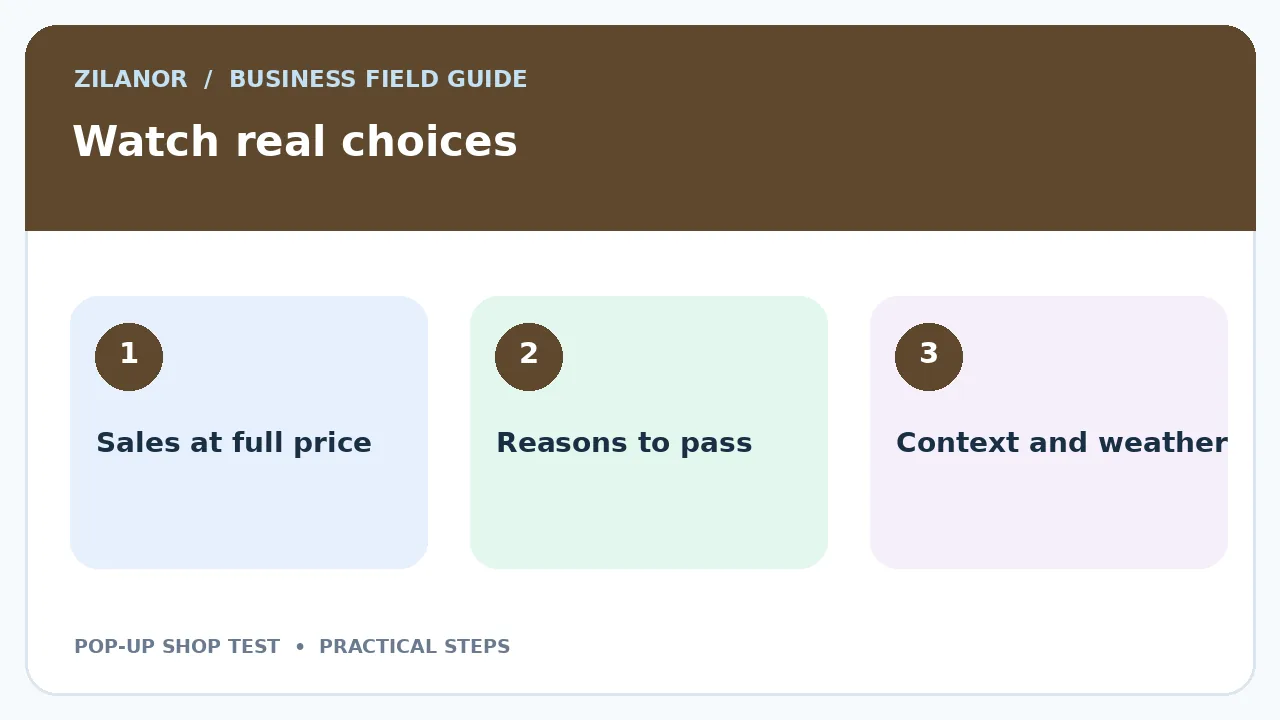
At the end of each hour, note visitors who stopped, items sold and the top question. Do not ask staff to count every passer-by if that distracts from serving buyers. A rough, consistent sample can still show which hours were busy and what people wanted.
Write down common objections. Did buyers think a product was too large, hard to carry or unclear to use? Note their words, but do not treat one comment as a rule for all buyers. Look for patterns across days and types of visitor.
A small notebook can be enough. Keep it away from personal data you do not need. If you collect email addresses, make the purpose clear and follow the rules that apply. Sales data and a customer mailing list are not the same thing.
Do not let a special event fool you
Compare the context before making a lease choice
A fair, concert or holiday market can bring a crowd that will not be there on a normal Tuesday. Great event sales show that the brand may fit that event. They do not prove that a permanent store in the same area will get the same buyers each week.
Note weather, local events, nearby promotions and any discount you offered. A pop-up with half-price stock may sell fast but teach little about the price you need in a full shop. Record the price paid so you can check real margin.
If possible, run a second test on a normal trading day. Change only one major factor at a time, such as location or product mix. That makes the result easier to read. A second small test may be safer than rushing into a long lease.
Talk to buyers without leading them
Ask about their real choice
Do not ask, “Would you love to see this store open?” Many people will say yes to be kind. Ask what they came to buy, which other shop they looked at and why they chose this item. If they did not buy, ask what was missing, with no pressure.
Let staff listen more than they talk. Record short notes after the buyer leaves. The strongest insight often comes from a real trade-off. A shopper may like the design but need a smaller size. That can lead to a product test rather than a lease decision.
Keep a clear difference between a sale and a promise to buy later. A person who takes a card may return, but that is not cash yet. Track follow-up orders separately so the team can see what the pop-up led to over time.
Review the test with a clean scorecard
Use margin, repeat intent and effort
After the event, total sales and direct costs. Add the pop-up cost and staff time. Count leftover stock and any damaged items. Then look at which products sold, at what price and at what times. Do not hide weak results behind a good photo of a busy stand.
Compare the result with the target you wrote before the test. If the main goal was to see whether buyers would pay full price, show how many did. If the goal was to test a new area, note where visitors came from if they shared that fact by choice.
Bring a person who was not at the event into the review. They may spot costs or gaps that excited staff missed. The point is to decide what to do next, not to prove that the founder’s idea was right.
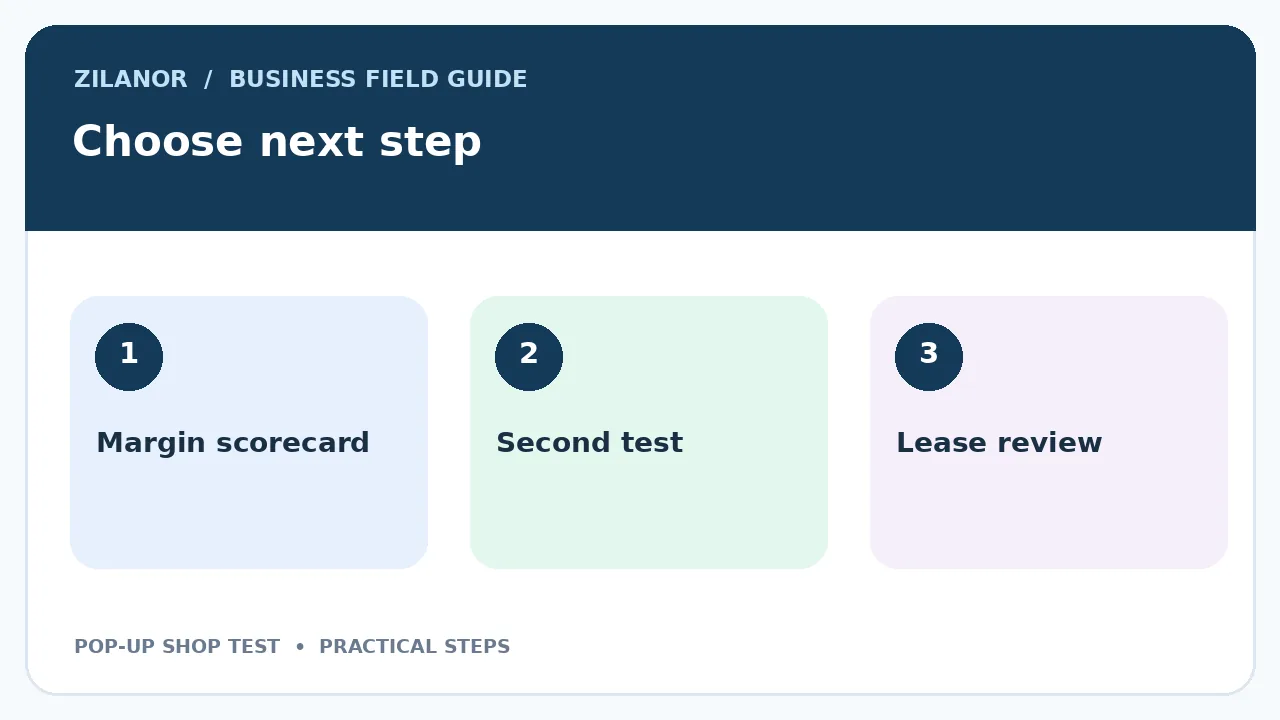
Choose the next small step
If the result is weak, keep the loss small and learn from it. You may need a better site, a clearer product or a lower-cost channel. If it is promising, try a second event, a short shop-in-shop deal or a limited lease. Ask a local expert to review any contract before you sign.
A pop-up works best as a test of one real business choice. Set a clear question, count all costs, watch what buyers do and keep the context in view. A good result is not always a permanent shop. Sometimes the best result is knowing what not to build.


Pingback: Break-Even Analysis for Small Businesses | 2026