

Customer Interview Research for Small Businesses: Find Better Product Ideas Without Leading Questions
Do you ask people if they like your new idea? Most will say yes. They may want to be kind. Yet a nice reply does not mean they will buy. A short talk about what they do now can teach you much more.
This is the aim of a buyer chat, often called a customer interview. You ask about real tasks and past choices. You listen for the pain points. You do not try to sell the person your new idea. This guide will help a small firm learn from these chats.
Start with one clear question
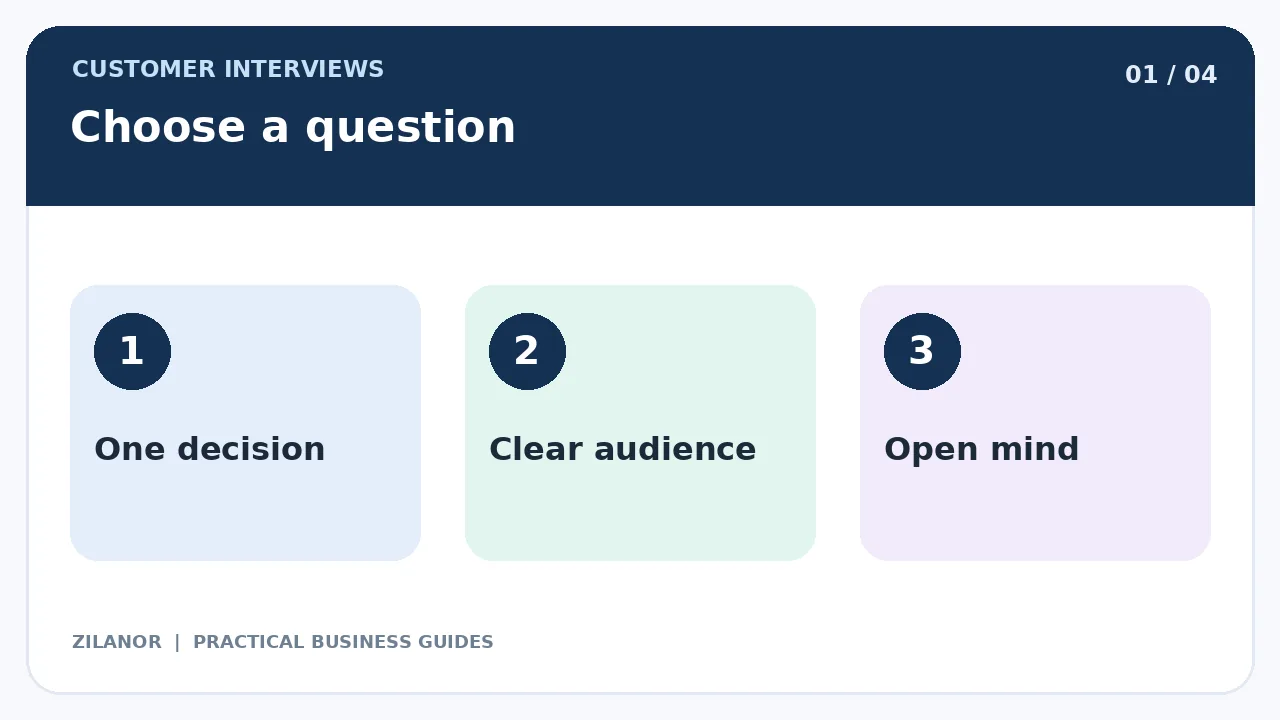
First, think about the choice you need to make. Should your shop offer late-day drop-off? Should your app add a new tool? Do buyers know what your service fee covers? Pick one key issue for the study.
Write down what you think is true. You may think price is the main reason people leave. But a slow reply may be the real issue. Your first guess is just that—a guess. Be ready for the talks to show you were wrong.
Know who you need to hear from
Talk to people who face the issue. Past buyers can tell you what it was like to use your service. People who chose a rival can tell you why they went there. New people can tell you how they solve the same need today.
Do not speak only with your fans. They may like your brand too much to see a flaw. If you sell to many regions, try to hear from more than one place. Keep in mind that a few talks cannot prove what a whole market wants.
Invite people in a fair way
Tell each person what the talk is about and how long it may take. Let them choose to join or not. If you will record the call, ask first. If you offer a small gift, say how it works. Do not ask for praise in return.
Keep names, phone numbers, and notes safe. Share them only with staff who need them. Check the privacy rules for your market. Do not record a call in secret.
Ask what they did last time
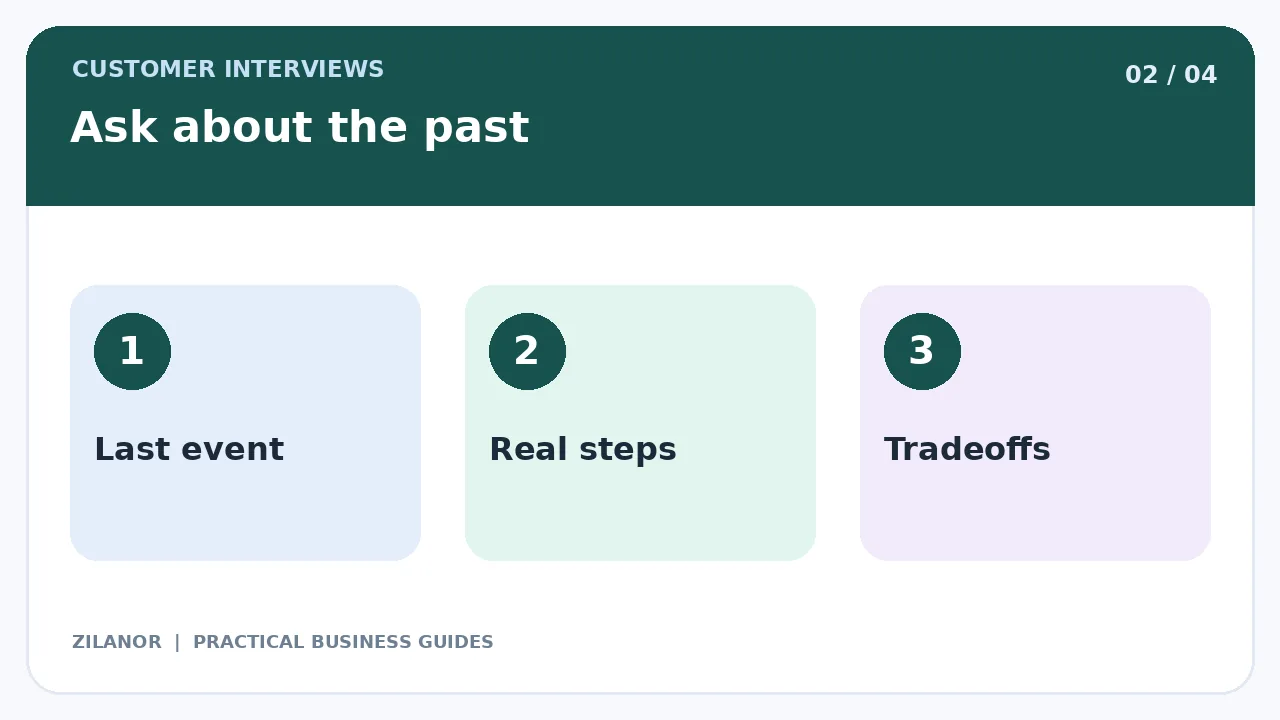
Past acts can teach you more than a guess about next year. Do not start with “Would you pay more for fast shipping?” Ask, “Tell me about the last time a parcel was late.” Then ask what the person did and why.
They may have called the seller. They may have gone to a store. They may have changed the date of a gift. Each act shows a need. It may also show that your new feature is not the best fix.
Good follow-up questions
“What did you try first?” is a strong question. So is “What went wrong?” You can ask “What did you do next?” and “Why did you choose that?” Give the person time to think. Do not rush to fill each pause.
Ask for a real case when a reply is vague. If they say a task is hard, ask them to walk you through the last time. This helps you learn what “hard” means to them.
Do not lead the person
A leading question hints at the answer you want. “Would our smart new app make your life easy?” is one. The person may say yes to be nice. Ask “How do you do this task now?” instead. That leaves room for a real story.
Do not argue when someone gives a view you do not like. You are not there to prove your idea is good. You are there to learn. If a person loves a rival tool, ask what it does well. Their reply can show a gap in your plan.
Keep the talk short and calm
For one small issue, a call of about twenty minutes may be enough. Start with the person’s role and task. Then ask about the last real case. Use most of the time to listen. End by asking if there is a key point you missed.
Do not spend ten minutes on your sales pitch. If they ask about your product, give a short, fair reply. Then go back to their own needs. Keep notes as you go, or record the call with consent.
Write notes that stay true
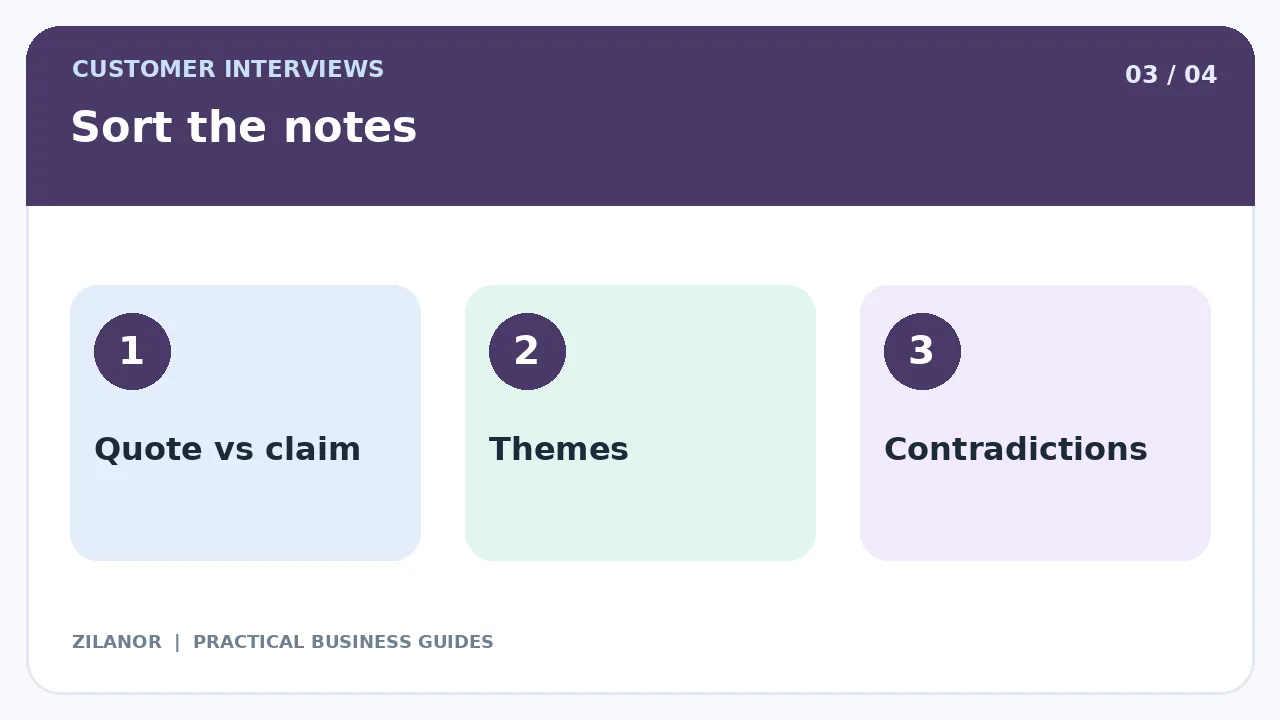
Keep the facts apart from your own guess. “The buyer used a phone on the train” is a fact from the chat. “Our phone site drives all sales” is a guess. Do not turn one story into a broad claim.
Use a short note form. Write the task, what the person tried, what went wrong, and what they did next. Save a few exact words if they help. Do not twist a quote to make it sound like praise.
Do not make a small sample look huge
If four out of five people mention a flaw, that is worth a look. But it does not prove that four out of five people in the whole market have the same view. Say how many people you spoke to and who they were.
A few deep talks can help you find ideas for a new test. They are not the same as a large survey. Do not put a false percent on a sales page.
Find themes and odd cases
After a few talks, read the notes. Mark points that come up more than once. Maybe buyers cannot find your return rule. Maybe the price is clear but the service scope is not. Put these points into a short list.
Look at cases that do not fit the main theme too. If one buyer had no trouble with the page, ask what they did. This may show that the issue occurs only on some phones or in some places.
Turn a finding into a small test
Do not build a big new tool due to one comment. Try a small fix first. If people do not know what a service fee covers, add a clear line near the price. Then check if support calls about that fee go down.
If people say your booking steps are hard, watch a few people try them. You may find that one button is easy to miss. A small page change may help more than a new app.
Example: a meal shop
A meal shop wants to sell a weekly plan. It asks buyers about how they plan meals now. Some say they spend too much time on menus. Others say the main pain is that food comes when they are out. The team learns that time slots may matter more than a larger menu.
It tests a new drop-off slot with a small group. It does not claim that all buyers want it. It checks real orders, late drop-offs, and buyer notes. The talks gave it a better first test.
Share what you learned
Write a one-page note for your team. Say what choice you tried to make. List who you spoke to, the top themes, and the cases that did not fit. Then name one or two tests to run next.
Be fair with bad news. If buyers like the idea but do not spend money on it, say that. The point is to avoid a bad bet. A useful study may lead you to drop an idea and save cash.
A simple interview script
- What were you trying to do?
- What did you try first?
- What was the hard part?
- What did you do next?
- What would you do if this option went away?
Keep learning after the first test
New buyers may face new needs. A rule may change. A rival may add a new tool. Repeat a few short talks when you face a new choice. Keep the notes in one safe place so you can compare themes over time.
Do not treat each talk as a vote. Use it to learn how people think and act. Then check the idea in a real test with a clear goal.

Common questions
How many talks do I need?
There is no one right count. A few can reveal a flaw. A broad claim needs more work and a fair sample.
Can I speak only to past buyers?
You can start there. But they may not show why new people choose a rival. Add other groups when that matters.
Should I ask if people would buy?
You can ask, but a yes is not proof. A real choice or paid test tells you more.
Sources
For safe use of people’s data, see ICO guides where they apply. For useful first-hand web content, read Google’s people-first guide.


Pingback: Pop-Up Shop Test: Check Retail Demand First
Pingback: Product Comparison Pages That Help Buyers Decide (2026)