
B2B Customer Case Studies: Show Real Results With Permission and Proof
A case study can help a buyer see how a product works in real life. Yet a story full of big claims and vague praise may do little to build trust. Worse, a firm can harm a client relationship if it shares private results without consent. A useful case study needs a clear problem, facts the client can check and honest limits.
This guide shows how a small business can create a B2B case study from real work. It is for service firms, software teams and suppliers. The process does not depend on one country. Rules on privacy, endorsements and advertising differ, so get local review for sensitive claims.
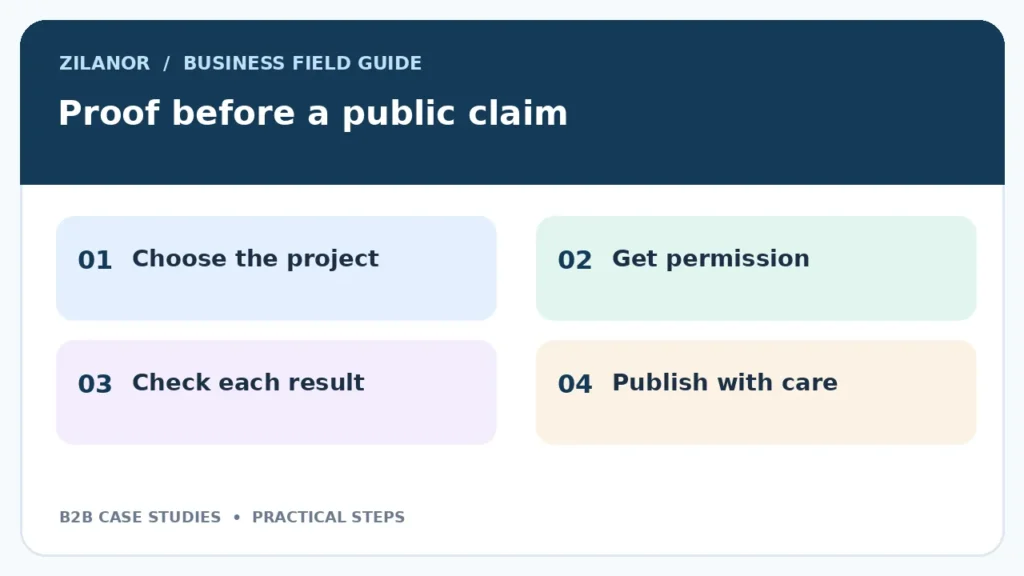
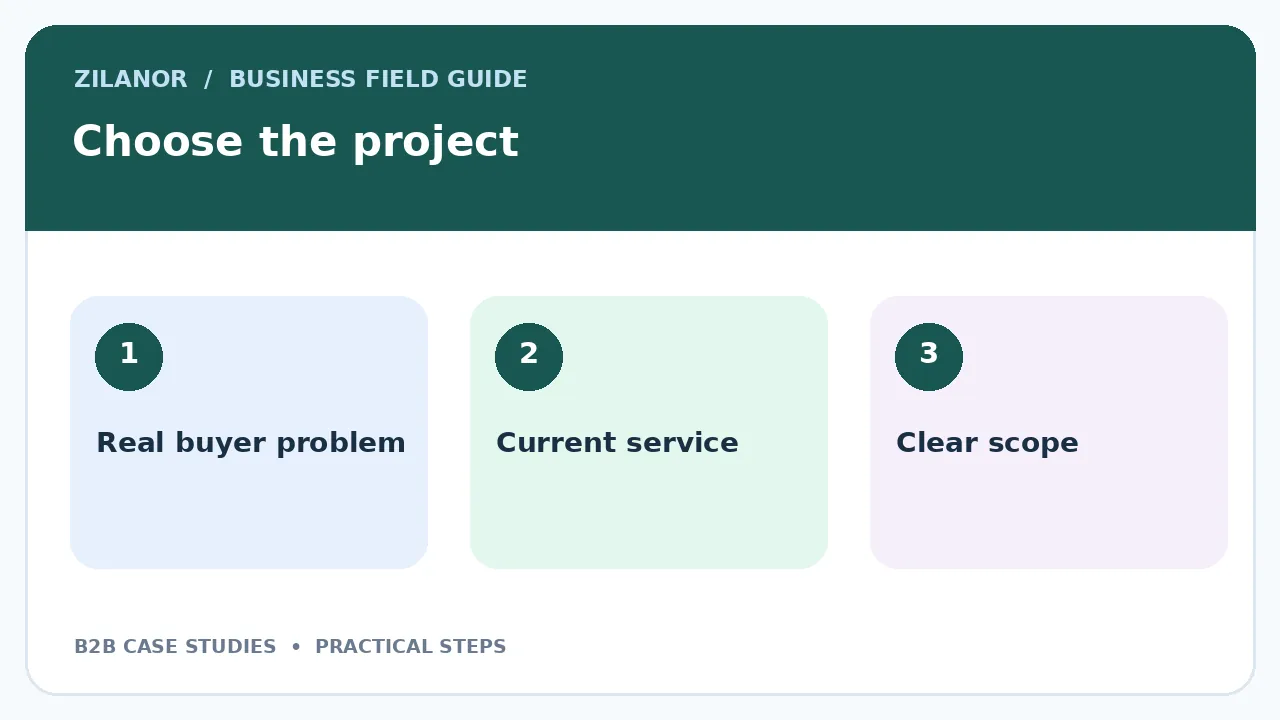
Choose a project worth explaining
Look for a clear before and after
Pick a client project with a well-defined task and a result that can be described. A story does not need a huge win. A small change to order accuracy or staff time can be useful if the evidence is sound. Choose work that reflects the service you sell now, not an old offer that no longer exists.
Ask whether the client would be happy to talk about the work. If the project was private or the outcome is still in doubt, wait. Do not use a client name or logo just because the contract is complete. Permission to do a job is not the same as permission to publish it.
A small logistics firm may have helped a buyer cut manual order checks. That can be a good story if the team can show what changed. A vague claim that the service “transformed operations” is less useful than a real process example.
Get written consent before drafting
Agree on the public facts
Ask the client which name, logo, quotes, photos and results may appear. Explain where the story may be used, such as the website, sales deck or social posts. Give them a clear way to review the draft. Keep the approval in a shared record.
If the buyer does not want to be named, ask whether an anonymous case is allowed. Do not make a named story look anonymous by changing only a few words while keeping details that identify the firm. A broad sector and size range may be enough.
Do not pressure a client to approve. A strong relationship is worth more than one page. Offer a way to tell a useful story without sharing private data. If that is not possible, choose another project.
Interview the people who did the work
Ask about the real process
Talk to one client contact and one person from your team. Ask what the problem looked like before the project, what they tried, what changed and what made the work hard. Use open questions. Do not ask, “How much did we improve your business?” before the client has described the result.
Ask for examples of a normal day before and after. A buyer may say that staff used to copy orders by hand from three systems. Now one person checks a daily file. That detail helps a reader see the work in plain terms.
Take notes and ask before recording a call. Keep private data out of the transcript. When a quote is used, send the exact wording to the speaker for approval. Do not turn a mild comment into a glowing endorsement.
Separate facts from estimates
Show the source and time period
A result such as “time saved” needs a method. Was it measured with a timer, estimated by staff or taken from system logs? State which one. A claim about fewer errors needs the count before and after, the period and the work volume. Without context, a percentage can mislead.
For example, a team had twenty data errors in a week of two hundred orders. After a change, it found ten errors in a week of two hundred orders. The rate fell from ten percent to five percent in that small sample. That does not prove the same result will hold every month or for other clients.
Ask the client to confirm the numbers and any limits. If the source is an internal report, describe it without exposing private rows. Do not invent a result to fill an empty section. A clear account of the process is still useful when a reliable metric is not available.
Write a story buyers can follow
Use problem, choice, work and result
Start with the client’s job and the pain point. Then show why they chose the approach. Describe the steps that mattered, including any trade-off or delay. End with what changed and what remains open. This makes a case study feel like real work rather than an ad.
A strong middle section may show how a test failed and what the team fixed. That does not weaken the story. It gives the reader a better view of how the firm solves problems. Avoid long product feature lists. Show each feature only when it played a clear role.
Use short paragraphs and helpful headings. A buyer may scan the page for a problem like their own. A simple chart or workflow can help if it is accurate. Do not use a decorative image as proof of a result.
Use quotes with care
Attribute words to the right person
A quote should sound like something the client truly said. Keep it short and tied to a point. Ask the speaker to approve it in writing. Use their name and role only with permission. If anonymity is needed, describe the role in broad terms.
Do not write a quote for the client and present it as their own words without approval. You can suggest a draft based on the interview, but the person must confirm it. Avoid claims such as “best in the market” unless there is strong evidence and a sound reason to use them.
The US Federal Trade Commission guidance on endorsements is one recognized resource on truthful marketing claims. It is not a global legal rule. Check the requirements in the markets you serve.
Protect sensitive client details
Review screenshots and examples
Remove names, account numbers, prices and customer records that the client has not cleared for use. A screenshot can reveal more than the text beside it. Check the browser tabs, file names and small labels before posting an image.
If you show a sample workflow, use test data or a clear mock example. Label it as an illustration. Do not make a staged dashboard look like a real client report. A reader should know what is measured and what is shown only to explain the process.
Give the draft to the client contact and the internal privacy or legal reviewer where needed. Make the approval step part of the publication plan, not a last-minute favour.
Make the page useful for the next buyer
Answer practical questions
A reader may want to know how long setup took, what staff needed to learn and what went wrong. Include these details when they are safe to share. They help a buyer decide whether the approach fits their team. Avoid making the story a hidden sales call.
Show the size and scope of the project. Was it one shop, one team or a multi-site rollout? A result from ten sample users may not apply to a firm with thousands. A clear scope makes the case more useful and more honest.
Link to a relevant guide if it explains a method in more depth. Keep the link text natural and useful. Do not fill the page with raw URLs or unrelated offers.
Check the final page before it goes live
Use a two-person fact review
Ask someone who did not write the story to check every date, number and quote against the source. Then ask the client to review the approved details. If the two reviews find a gap, fix it before publication. An extra day is better than an incorrect public claim.
Read the mobile page. Make sure the figures are clear and the chart has a text description. Check the image alt text and links. Do not hide key proof in an image alone. A simple page that loads well is often easier to use than a heavy animated story.
Keep a record of the client approval and the final file. If results change or the client asks for a correction, you will know what was agreed and where the story appeared.
Track whether the case study helps
Look for useful questions
Sales staff can note whether prospects refer to the story and which part they ask about. Website traffic can show reads, but a page view alone does not prove trust or a sale. Ask buyers if the case answered their questions and what was missing.
Review the story after a year or when the service changes. A once-true number may become stale. Add a clear date or update note where needed. Do not keep a claim on the site just because it once worked well in a campaign.
A small firm may get more value from three honest case studies than from twenty thin ones. Use quality and proof as the test.
A proof check before you share a story
Run one claim through the test
Pick the main result. Find the source. Does it show the same date and number? Ask a second person to check it. If the method is not clear, do not use the claim yet. A small true fact is better than a large guess.
Take one quote from the client talk. Read it in full. Does the short line keep the same sense? Ask the speaker to check it. Keep the reply that says yes. If the quote is not approved, leave it out.
Now scan each photo. Look at screen tabs, names and small labels. Can a buyer see a private field? If yes, use a safe crop or a test image. Do not blur a small part and hope it is enough. Check the full page again.
Ask a fresh reader to find the problem, the work and the result. Can they name each in one line? If not, move the facts. Use short headings. Cut claims that add no proof. A case should help the next buyer decide.
Last, note where the story will go. Get the right approval for those places. Save the final draft and the review date. If the client later asks for a fix, the team will know what to check.
Start with one client this month
Choose a finished project with a clear task. Ask for consent. Interview the people involved and gather source records. Write a short problem-to-result story, show any metric with context and get a fact check. Publish only after the client has approved the public details.
The strongest case study does not shout. It lets a reader see a real problem, a real choice and a result that the client can stand behind.