
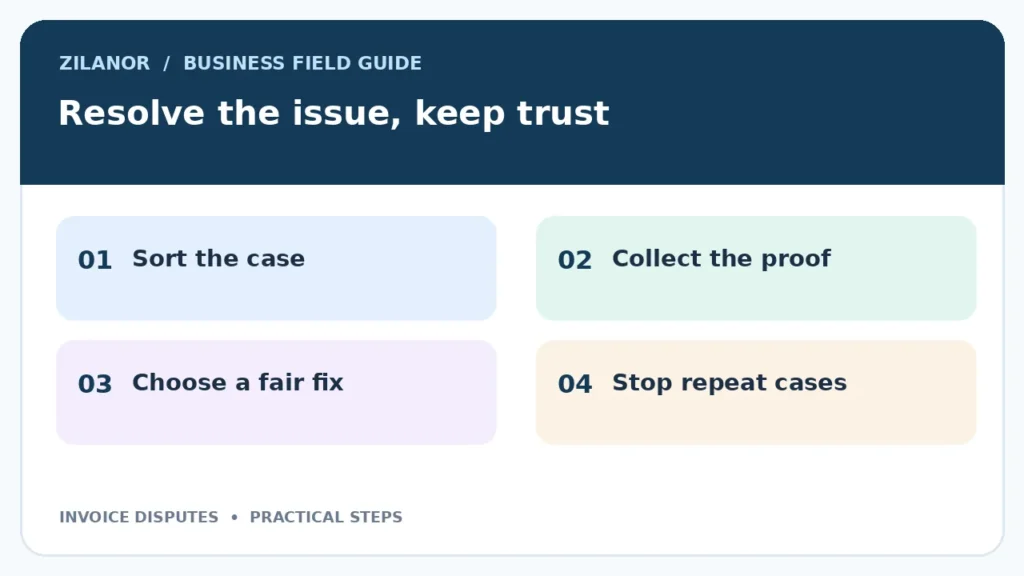

How Small Firms Can Manage Late Invoice Disputes Without Losing a Client
A late invoice is not always a case of a buyer who will not pay. The client may say the work was not done, the price changed, or the invoice went to the wrong person. If a firm treats each case as a debt chase, it may damage a good relationship and still fail to get paid. A clear dispute process can find the real issue and help both sides agree on the next step.
This guide is for small firms that sell services, parts or project work to other firms. It covers records, talks, credit notes and follow-up. Laws on debt, tax and contract rights vary by place. Get local advice before you add interest, threaten action or write off a balance.
Tell a true dispute from a slow payment
Ask one clear question first
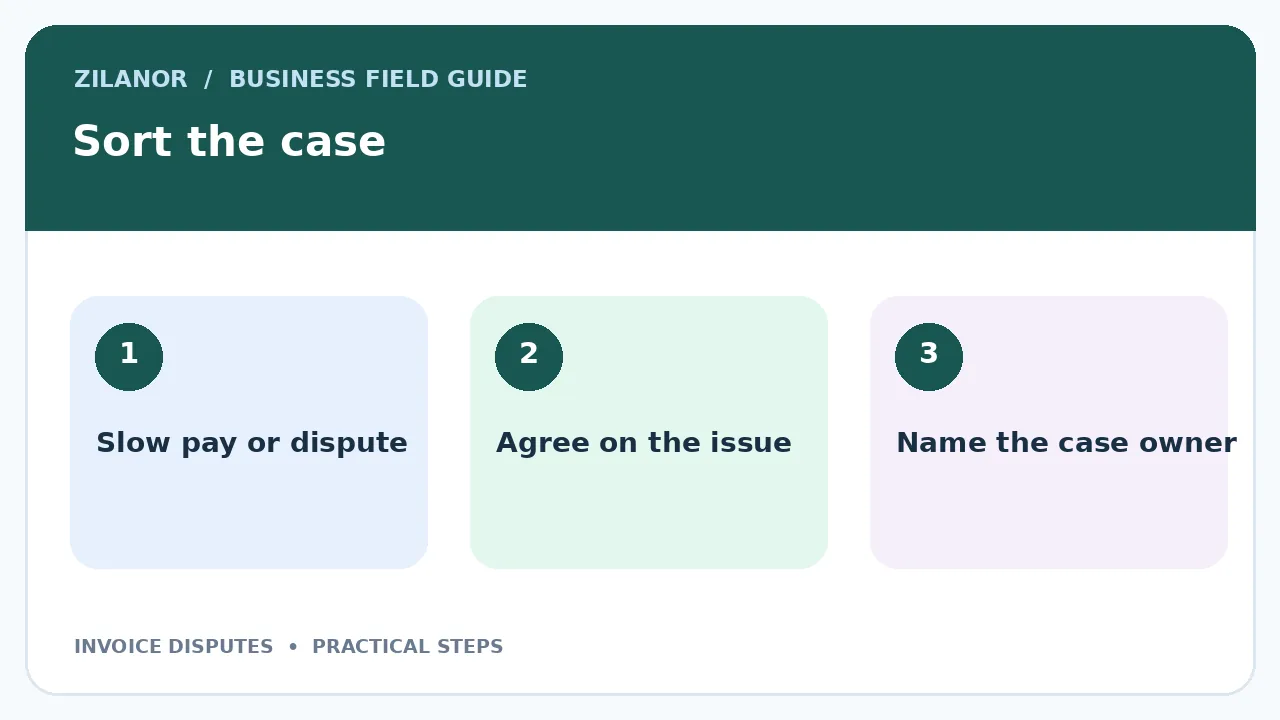
Start with the invoice number and the due date. Ask whether the client accepts that the amount is due. If they say yes but need time, this is a payment timing issue. If they say the amount or work is wrong, it is a dispute. The two need different paths.
A small video studio sent a bill for a campaign shoot. The buyer says one final clip was not delivered. The studio must check the agreed list of files before it sends more payment notices. A late fee does not solve a missing file. Good facts do.
Use a short email or call. Ask what part is not agreed, what proof the buyer has and what result they seek. Do not guess that the whole invoice is in dispute. Sometimes one line needs review and the rest can be paid now.
Build a case file in one place
Put the contract and work proof side by side
Gather the signed quote, order, delivery note, work log and emails that changed the scope. Keep the original files. Save them under one case number with the invoice. The person who takes the next call should not need to search five inboxes.
Write a short timeline. Show the order date, key changes, delivery date, bill date, issue raised and the last reply. Mark what each side agrees on. A timeline helps both the buyer and your own team see where the story split.
Take care with private client details. Give access only to the staff who need to solve the case. If files include personal data, follow your own privacy rules and local law. Do not paste full client records into an open AI tool to write a payment email.
Reply in a way that helps solve the problem
Confirm the facts before you argue
A good first reply names the issue in plain words. For example: “You told us that the second delivery was not in the folder. We will check the upload record today and reply by Thursday.” This is better than a long defence of your service.
Give a realistic time to investigate. If you need a vendor log or staff note, say so. Do not promise a same-day answer when the right person is away. A known update date builds more trust than a vague promise to look soon.
Keep one person as the case owner. Others may help, but the client should know who will reply. If two team members send different answers, the case can grow harder. Put the final view in the shared case file before anyone sends it.
Check scope changes with care
Look for what was agreed after the quote
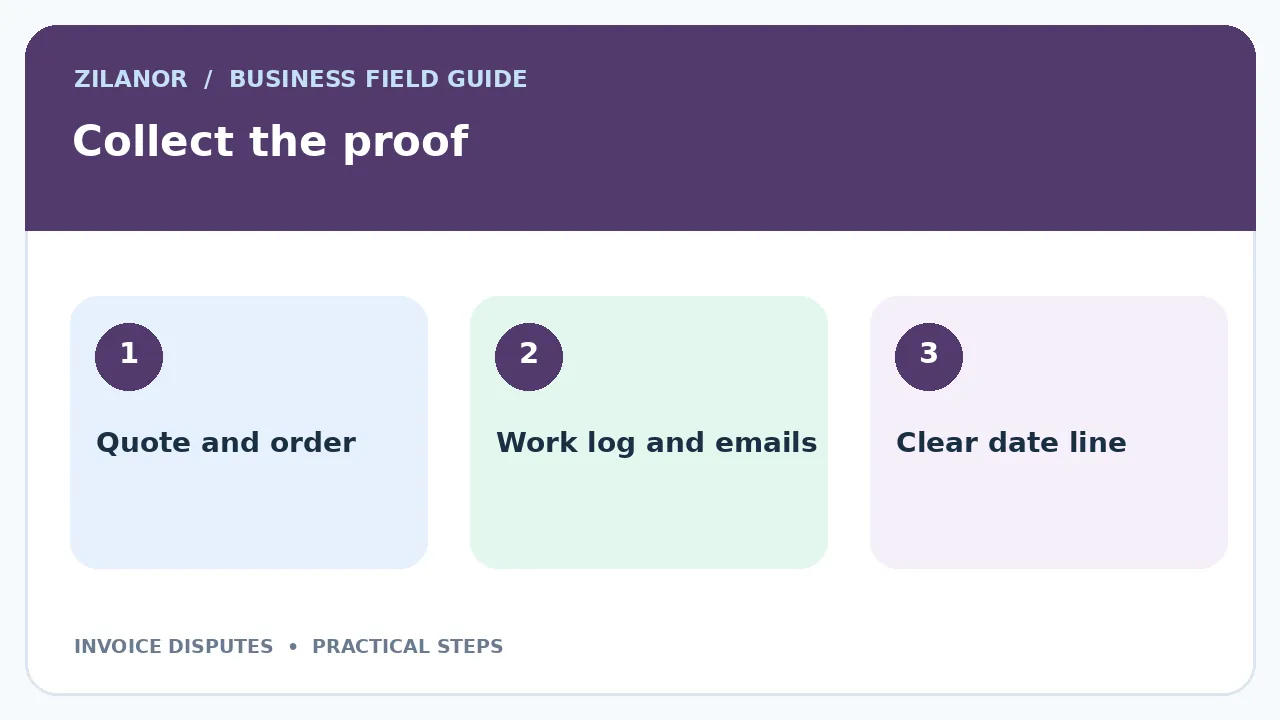
Many disputes start with a casual request. The buyer asks for an extra revision or a faster date. The team agrees on a call but never writes the new price. Later, both sides think their view is clear. The case file may show a gap rather than a clear fault.
If the scope was not set out well, discuss a fair fix. The firm might do one small task at no charge, offer a clear price for new work or change the bill. Do not invent a signed change order that does not exist. Use the case to improve how the team approves extra work next time.
A repair firm may have replaced an extra part during a job. If the client was not told, the cost may be hard to explain later. The right future step is a written approval point before extra paid work starts.
Use a clear decision table
Choose the fix based on evidence
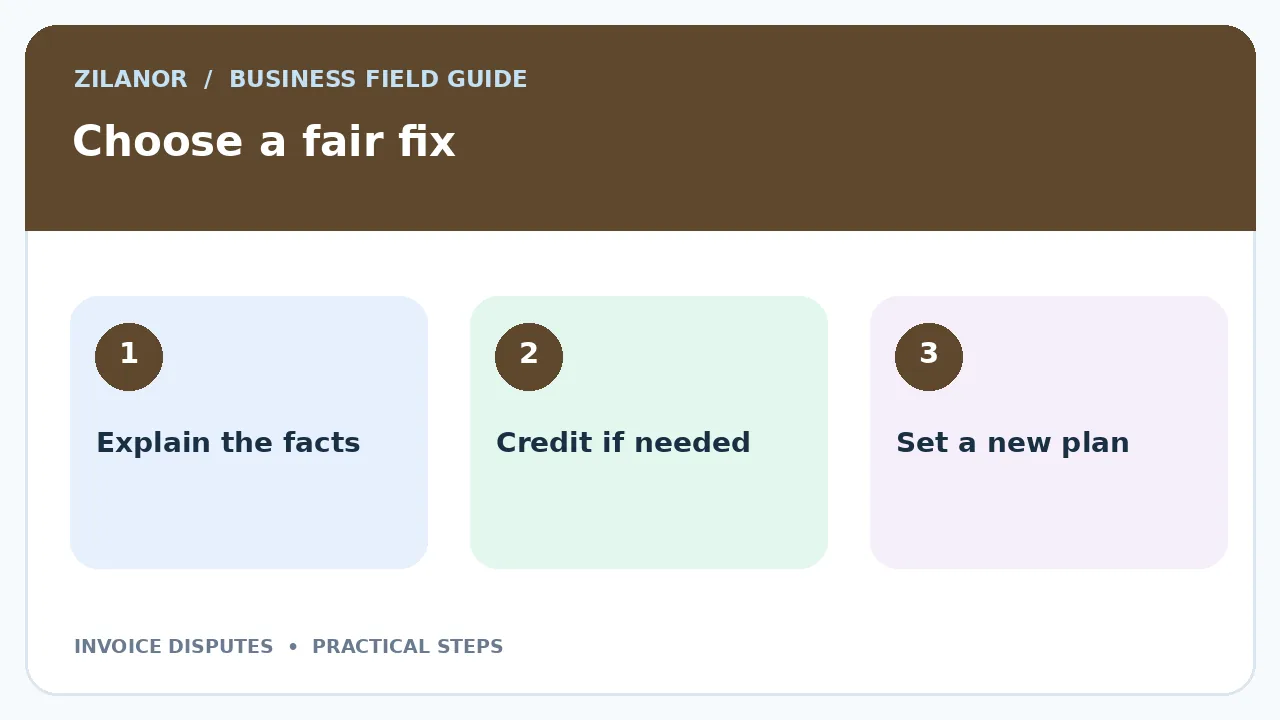
Most disputes lead to one of four outcomes. The invoice is right and the client has the proof. The firm needs to send a missing file or do agreed work. A line needs a credit note. Or both sides need a manager to discuss the gap. Record which path was chosen and why.
If you issue a credit note, link it to the right invoice and use your accounting system’s normal flow. Tax rules differ, so check the local process. Do not quietly change a final invoice file without a clear record. That can harm the audit trail.
If part of the bill is not disputed, ask whether the client can pay that part while both sides review the rest. Make sure any split fits the contract and local rules. Write down the agreed amount and date so no one has to rely on memory.
Offer payment terms only when the amount is clear
Put new dates in writing
Once both sides agree on the amount, a short payment plan may help a good client. Set dates, amounts and a contact for issues. Keep the plan small enough to track. Do not offer terms that leave your own firm unable to pay staff or suppliers.
For example, a client owes 2,400 in the agreed currency after a credit. They ask for two equal payments a month apart. The owner checks cash needs and the client’s past record before agreeing. Both sides then get the same written plan.
Do not tell the team to mark the invoice paid before money arrives. Use the right accounting state for a plan. Match each receipt to the balance. If a date is missed, follow up as the plan says and take local advice before stronger steps.
Watch the real cost of a dispute
Track time and cause
A small balance can take many hours to fix. Note staff time spent, missing records and the delay in cash. This gives a fuller view than the unpaid amount alone. It can also show when a simple process change saves more than a hard debt chase.
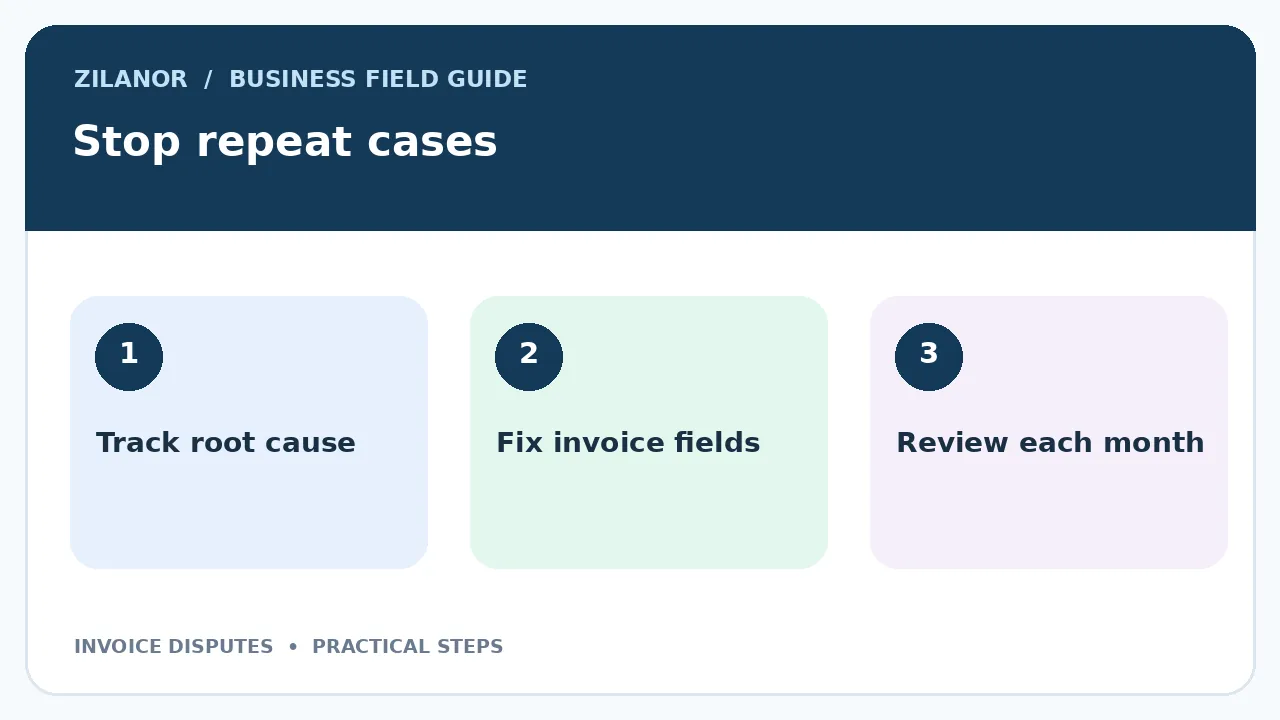
Group cases by cause each month. Common labels are wrong price, unclear scope, missing purchase order, delivery proof, tax details and buyer cash delay. Use a short list so patterns are easy to see. Do not turn every case into a new label.
If most disputes come from the same product, fix that product’s quote or invoice rule. If buyers often say they did not receive the bill, check contact data and send a receipt request. The best win is a dispute that never starts.
Make invoices easier to approve
Show what the buyer needs
Ask a few regular clients what their accounts team needs to approve an invoice. Some need a purchase order number. Others need a legal entity name, tax fields or a job code. Set these details before work starts, not after the bill is late.
Use a clear description of work. “Consulting services” may not help an accounts team match a bill. A note such as “April design work, phase two, as approved on 3 April” is easier to check. Do not include private details that should not appear on a shared bill.
Send the invoice to the agreed address. If the person who ordered the work is not the one who pays, ask for the accounts contact early. Confirm a due date that fits the written terms. Simple steps can remove weeks of avoidable mail.
When to involve a manager or expert
Use clear escalation rules
Staff should not have to judge legal threats or complex tax questions alone. Set a point where the case goes to a senior person. It might be a high amount, a major client, a fraud warning or an issue that has not moved after two agreed updates.
If the buyer alleges poor work that could cause harm, pause routine collection language and gather expert facts. If the case involves a firm in another country, get advice on the contract’s law and venue. Do not assume the rules from your home market apply everywhere.
Keep notes of decisions, but avoid personal attacks in the case file. The client may see parts of the record later. Clear, calm notes help a new staff member understand the case and reduce the risk of a harsh reply.
Give your team a short weekly rhythm
Each Monday, check open disputes and name the next action. On Wednesday, send any updates due. On Friday, review cases that need a manager. Keep each meeting short. The goal is to clear blockers, not to report the same age number each week.
Close a case only when the amount and outcome are recorded. If the bill was changed, save the credit and final balance. If the client paid, match the receipt. If the claim remains open, keep a note of the next date and owner.
Final takeaway
A late invoice dispute is a fact-finding task before it is a collection task. Separate a true disagreement from slow payment. Keep the quote, proof and timeline in one case file. Speak in plain words, give real update dates and record each fix. The same work will help you send better invoices next month.
For a wider view of payment and access trends, the World Bank Global Findex 2025 surveys about 148,000 adults in 141 economies. It is broad context, not a direct measure of business invoice disputes. Your own case records are the right source for that decision.


Pingback: Chargeback Evidence for Small Businesses: 2026 Guide
Pingback: B2B Case Studies: Consent and Real Results