
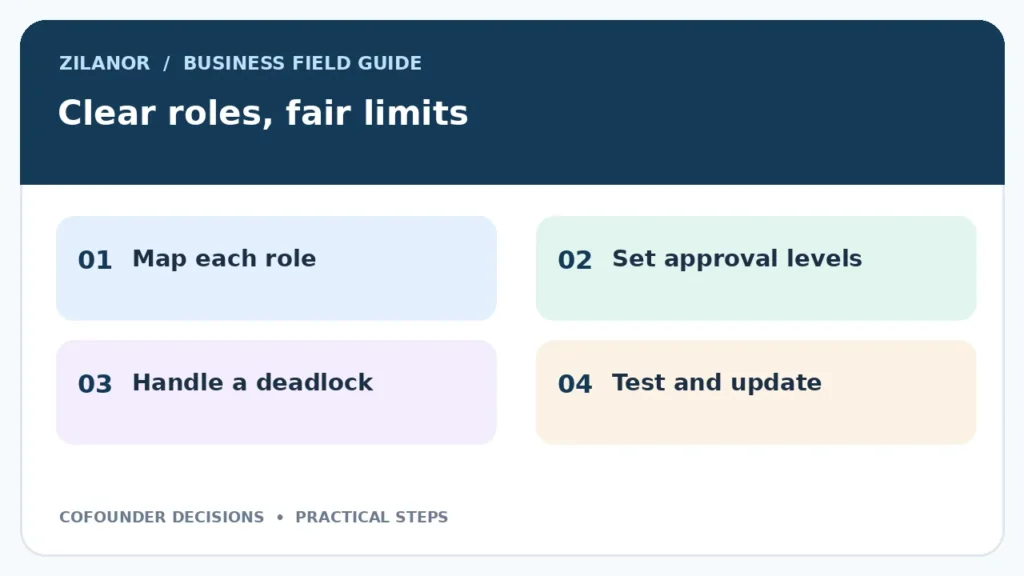

Small Business Cofounder Decision Rules: Avoid Deadlocks as You Grow
Two people start a firm because they trust each other. One handles sales and the other builds the product. At first, most choices happen in quick talks. As the firm grows, those talks can turn into conflict. Who may sign a deal? Who can hire? What happens when both owners disagree? A short set of decision rules can protect the work and the relationship.
This guide shows how cofounders can divide daily authority and plan a fair way to handle a deadlock. It is not legal advice. Company law, ownership rights and director duties differ by country. Ask a qualified lawyer to turn agreed principles into the right documents.
Start with the jobs each founder owns
Separate roles from share ownership
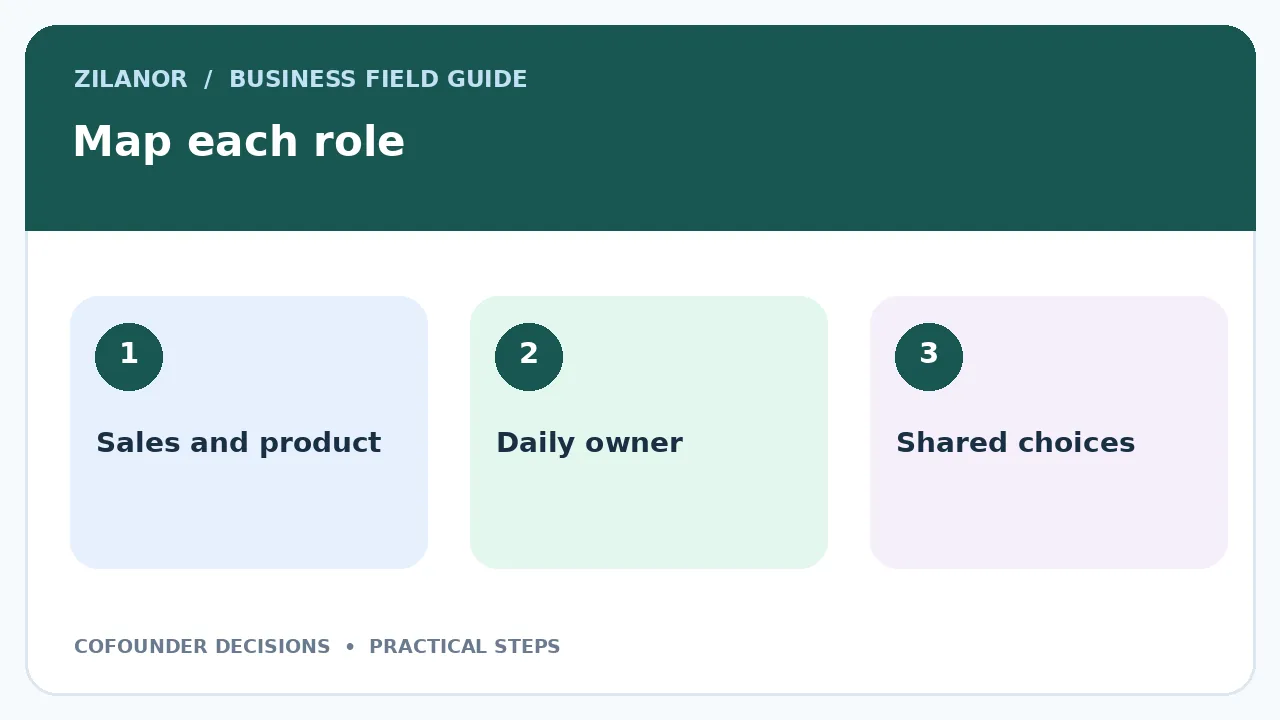
A founder may own half the company but not need to approve every ad, refund or staff rota. Write down who leads sales, product, finance, staff and operations. Give each area a clear owner. Then mark the small group of decisions that must be shared.
Make the role map based on skill and time, not pride. A founder who knows the product but works part time may not be the best owner for daily support. The map can change as the team grows. Write a review date so the roles do not become a permanent argument.
A small software studio has two founders. One speaks with clients and sets project scope. The other leads code and security. They may each make routine choices in their area, but they both approve a major loan or a move into a new market. That is the kind of line the rules should make clear.
Use three levels of decisions
Keep routine work moving
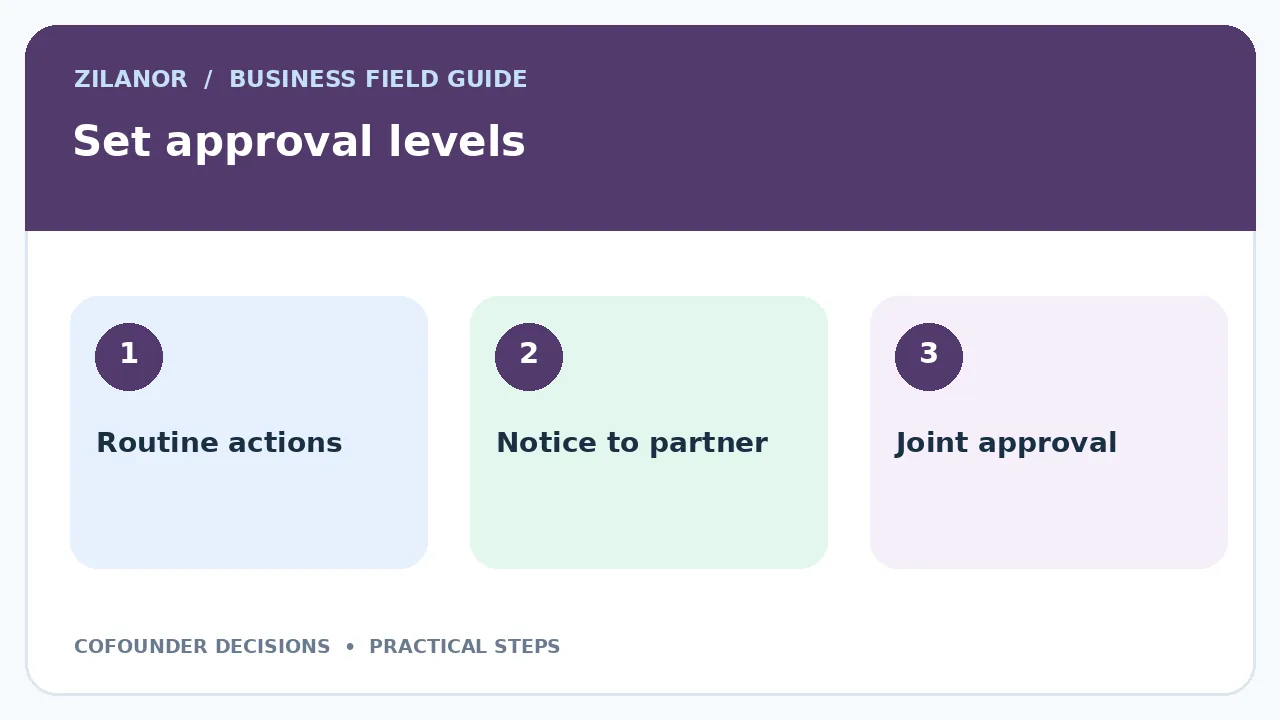
Level one is work a named lead may do alone within a budget and policy. Level two needs notice to the other founder before action. Level three needs both owners to agree, or the approval route set by law and company documents. Keep the list short enough to use.
Routine choices might include buying approved supplies or refunding a normal case. Shared choices may include a senior hire, large contract, new debt or sale of a key asset. Do not copy someone else’s money limit. Use amounts that match the firm’s cash and risk.
Write a rule for urgent work too. If an important system fails, the technical lead may need to stop it at once. The rule should let staff protect the firm while requiring a prompt report to the other founder. Do not make every emergency wait for a meeting.
Write a decision note, not a thick book
Record reason and owner
For a major choice, keep a one-page note. State the problem, options, cost, main risk, decision, owner and review date. This helps founders remember why they chose a path. It also helps a new manager act without repeating a long debate.
Use the same place for notes. Do not leave a key choice split across calls and private chat. Give each founder access to the record and set a clear rule for sensitive files. A shared history can lower tension when memories differ.
Not every choice needs a memo. A routine stock order should use the normal work rule. Keep the formal note for decisions with lasting cost or risk. The point is a clear record, not more admin work.
Set a safe money approval path
Protect cash without slowing small purchases
Choose a spending limit for each role. Put big payments, loans and changes to bank details behind a second check. Separate the person who asks for a major payment from the one who approves it where the team can do so. This is useful even when both founders trust each other.
Use named accounts for banking and tools. Do not share passwords. If one founder is away, the business should still be able to pay staff and suppliers through a lawful backup process. Ask the bank what its account mandate allows before relying on an informal plan.
Review the limit after a major change in revenue, cash or team size. A number that worked at launch may be too small or too large next year. Tie the rule to real risk, not to a founder’s status.
Agree how to handle a deadlock
Use a path before emotions rise
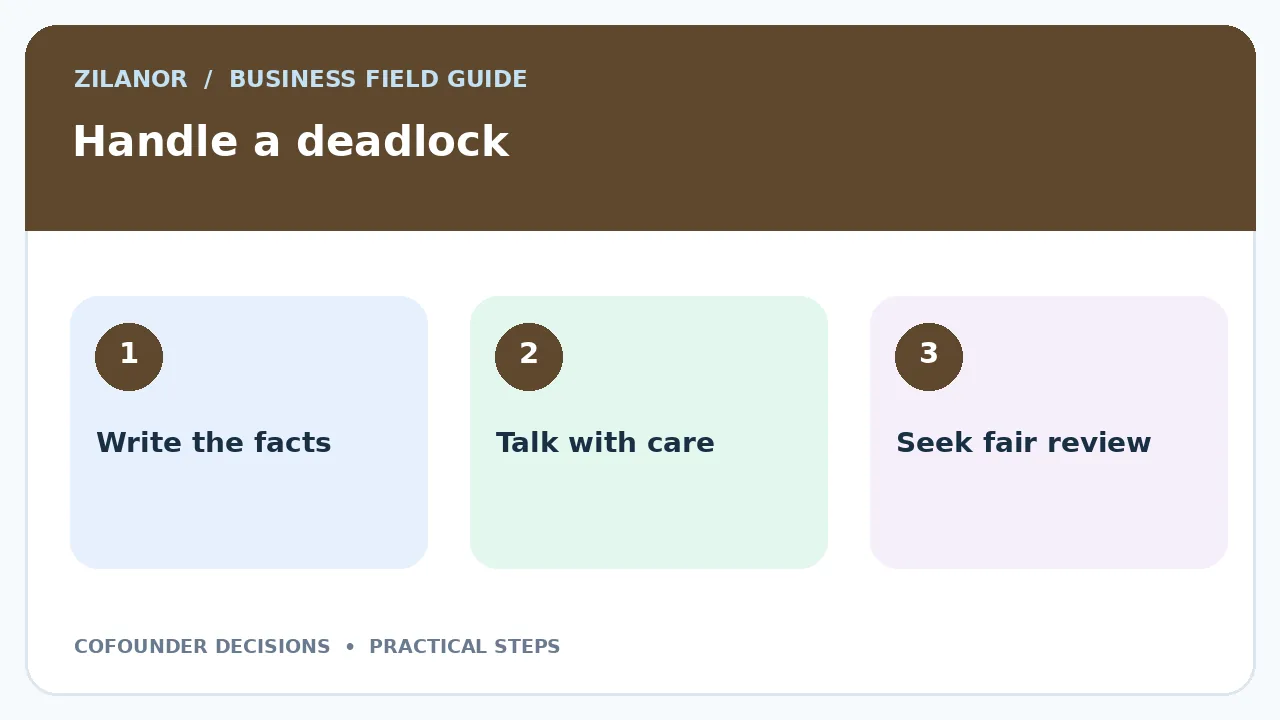
Start with a cooling-off time for non-urgent choices. Each founder writes the goal, facts and main concern in plain words. Hold a short meeting with a clear agenda. If they still disagree, ask a trusted adviser or mediator to help them test the options.
Some choices need a formal vote or another route under the company documents. The exact path depends on the business structure and local law. Have a lawyer check it. Do not assume a simple coin toss or one founder’s title can settle every legal question.
For daily tasks, the role owner may be able to act under a preset limit. For a major debt or ownership choice, the firm may need a stricter process. Name these cases early so a later dispute does not become a fight over who has power.
Keep personal issues out of team tasks
Use a respectful way to disagree
Set a rule that founders do not argue about one another in front of staff or clients. If a worker gets two orders that clash, they should know which lead to ask for a final answer. Do not make staff choose sides in an owner dispute.
Use facts and examples in hard talks. “This project missed its date twice” is clearer than “You never plan well.” Ask what caused the gap and what change could fix it. Write down the next step. A pattern of calm review is more useful than one large talk after months of stress.
If a dispute harms safety, staff welfare or the law, get the right expert help. A cofounder rule should not block a worker from reporting a serious problem through a safe channel.
Plan founder absence and loss of access
Keep the firm able to act
Each key system needs a named business owner and a backup route. The firm should not depend on one person’s personal email or phone for all admin access. Test the backup with safe accounts. Keep recovery details in a secure place that approved people can reach.
Think about what happens if a founder is ill or leaves for a time. Who can approve payroll? Who can speak to a critical client? Which decisions must wait? Put the practical steps in an operations plan. This is different from the legal terms for a founder’s exit or transfer of shares.
Ask a lawyer and accountant about the formal documents needed for illness, death, departure or a share sale. These questions are too important for an informal chat note. A good day-to-day plan should work alongside valid legal documents.
Review pay, effort and ownership as separate topics
Do not let a hard month change old deals by surprise
Founders may put in different hours as the firm grows. Talk about pay for work, profit plans and share ownership as separate issues. Do not assume that a busy month gives one person an automatic right to change shares. Use the formal agreements and local advice.
Write down what each founder is expected to do in a normal week. Review the plan when a person takes a new role or steps back. Keep the talk focused on the work the company needs and the fair way to pay for it.
If one founder brings in money while another brings in skills, document the agreed terms before the money is spent. Clear records protect both sides and make later funding talks easier.
Bring in managers without creating two bosses
Give staff one clear path
As the firm hires leads, each one needs a clear manager and a budget. Founders should agree which decisions they still keep and which they hand off. A manager who must ask both founders about every small choice has little real authority.
Set a meeting rhythm where leads can raise issues. Do not use it to redo their daily work. Review outcomes and hard choices, then let the role owner act. If a rule fails often, change the rule rather than making people work around it.
Write a simple handover when a task moves to a new manager. State the result, limits, tools and who signs off. This helps the team grow without building a new approval bottleneck.
Test the rules with real cases
Try five choices before a crisis
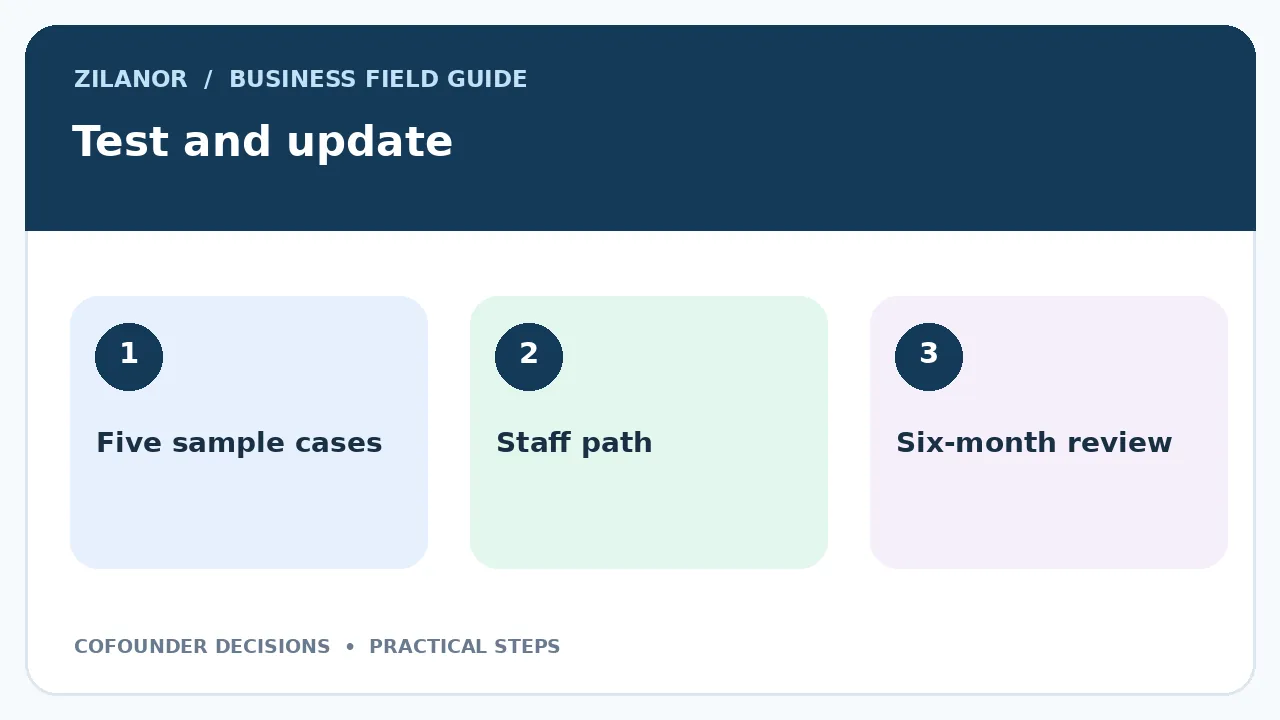
Use sample cases: a client asks for a large discount, a key worker wants a pay rise, a supplier changes bank details, a system fails and one founder wants to take a loan. Ask which level each case fits and who may act. If the answers differ, the rule is not clear.
Fix the wording and try again. Do not wait for a real dispute to see whether the process works. A small test can show a gap in money limits or a missing backup role.
Review the rules every six months or after a major change. Make sure they still fit the company documents. Tell the team about changes that affect their work, while keeping private owner matters private.
Five founder choices to test now
Do the drill before a real dispute
First, a buyer asks for a large price cut. Who may say yes? Find the limit. Check the cost. If the deal is too large, bring in the other owner. Log the choice. Do not make a new rule in the middle of the call.
Next, a staff lead wants to hire a worker. Who owns the role? Who sets pay? Who checks the cash plan? Use the job map. If the rule is vague, write one clear step. Ask a local expert about work law.
Now, a vendor sends new bank details. Stop the change. Call a known contact. Ask for a second check. Do not send cash based only on one email. A quick two-person rule can save a hard loss.
Then, one founder is away when the site fails. Can the team call the backup lead? Can they stop harm? Can they keep a log? Test the first move. The plan should help staff act without a long debate.
Last, both owners want a new loan but do not agree on the size. Write the need. Show the cash cost. List the risks. Use the agreed vote or advice path. Do not let a quick talk replace the legal rule.
Review what took too long. Fix the weak lines. Share only the work rules staff need. Keep private owner terms in the right place.
Try one more case. A client wants a new market. Who checks demand? Who funds the test? Can one owner act alone? Set a small trial limit. Name the stop point. Check the legal risk. Save the choice. Then review what the trial taught the team.
How to begin this month
Book one meeting to map the main roles. Choose a few shared decisions and set safe limits for routine work. Write a one-page note for the next major choice. Then ask a local lawyer to review the legal parts and a finance adviser to check the money rules.
Cofounder trust is vital, but trust works better with clear tasks and fair limits. Good decision rules let the team act, make conflict easier to handle and protect the business when its founders do not see every choice the same way.



Pingback: IFRS for SMEs 2025 Update: Small Business Guide
Pingback: Family Business Ownership Transition: Practical First Plan