


2025 IFRS for SMEs Update: A Practical Preparation Guide for Small Businesses
A new accounting rule can sound far from daily work. Yet a change in how a firm records sales, assets or contracts can affect its books, reports and bank talks. The IFRS Foundation issued the third edition of the IFRS for SMEs Accounting Standard in February 2025. It takes effect for annual reporting periods that begin on or after 1 January 2027. Early use is allowed. This guide shows how to prepare in 2026 without turning a small finance team upside down.
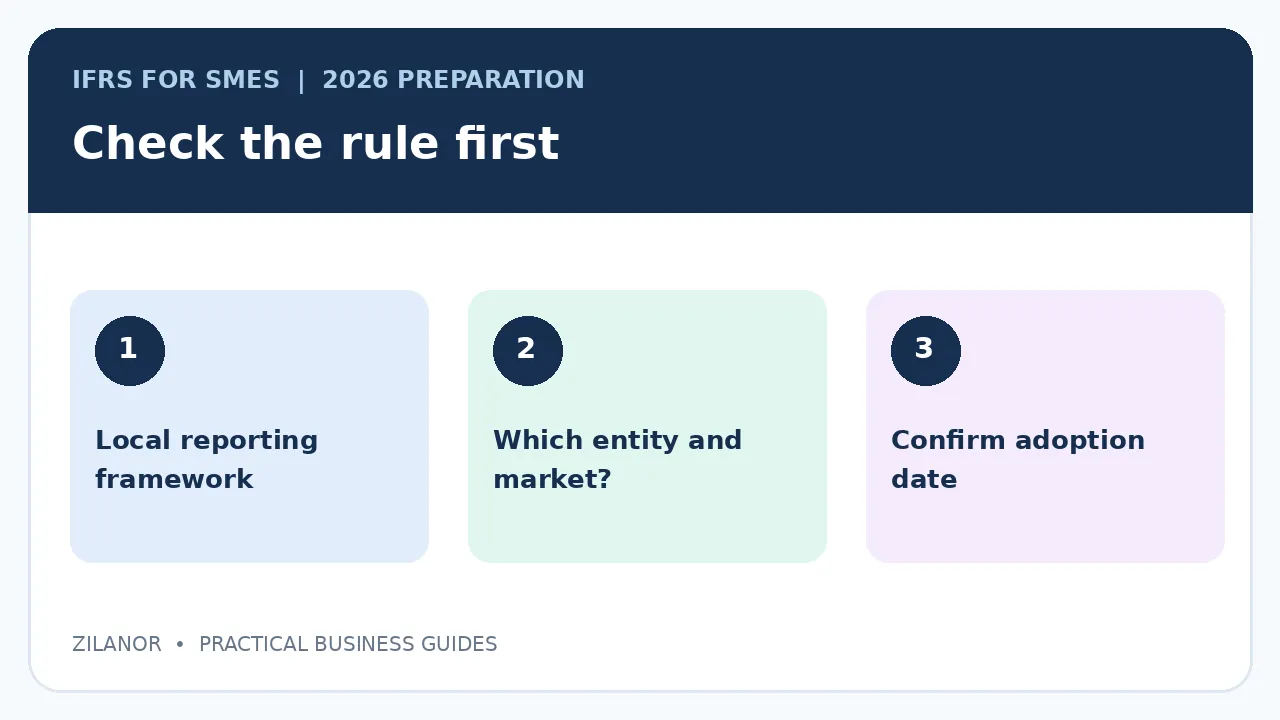
First, check if your firm must use this standard. Many small firms use local accounting rules instead. Some use full IFRS. The rules vary by country and by entity. Ask a qualified local accountant which framework applies before you change a single entry. The purpose here is to plan the work, not to give a legal or tax opinion.
Start with the rule your business uses now
Make a one-page accounting map
Open your latest annual accounts. Note the accounting framework shown in the notes. If you cannot find it, ask the person who signs the accounts. Next, write down who keeps the books, who reviews them and who sends reports to lenders or owners. A small shop may have one bookkeeper and an outside firm. A growing group may have staff in more than one market. Each needs a different path.
Do not assume that an update to an international standard will change your own accounts next year. The IFRS Foundation explains the new edition and its scope. A local regulator may adopt it on a different timetable. Keep the source rule and the local rule in separate rows. This simple step can prevent months of work on a standard your firm does not use.
For example, a family-run parts wholesaler sells to buyers in three countries. Its head office reports under one local standard, while its bank asks for a second set of figures. The owner should not replace the whole system on a guess. The first task is to map which reports use which rules and who relies on each report.
Build a change list from real accounts
Review the items that matter most
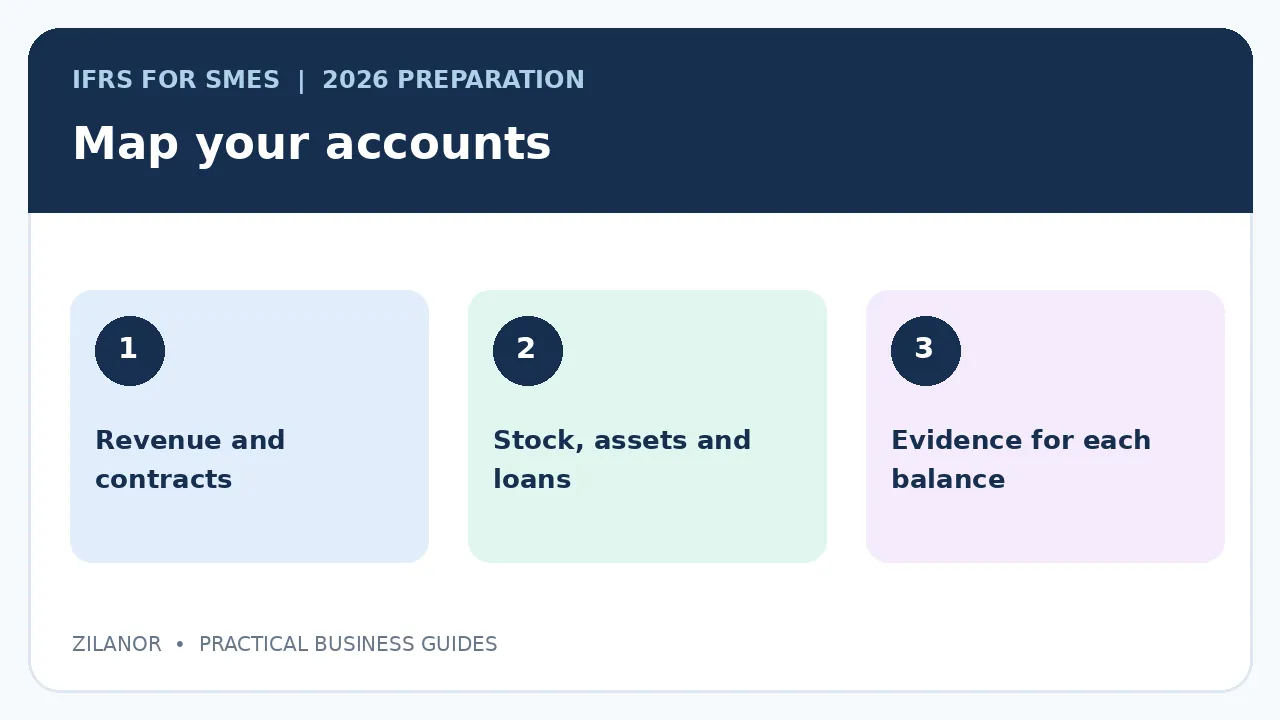
A standard is long, but your firm may have only a few areas that need much review. Take the trial balance and mark key groups: sales, stock, fixed assets, loans, leases, grants and owner funds. Then ask the accountant to check which areas face a change under the new edition. Record the result as no change, small change or deep review. Keep a note of why.
Think about a small service firm that sells support contracts for one year at a time. Its team may need to look closely at how contracts and related income are treated. A food maker, by contrast, may care more about stock and equipment. The right focus comes from the firm’s own accounts, not from a long list copied from a large public company.
Use a change register with five fields: account area, current rule, new rule, owner and next action. Each item should link to a source or written advice. Do not let a chat summary count as proof. When the team makes a choice, save the reason and the person who approved it.
Check your data before you change software
Most errors come from weak data, not from a lack of new tools. Test whether each asset has a cost, date and useful life. Check that each loan has a clear balance and payment plan. Match stock totals with counts. Review old journal entries that no one can explain. A clean data set gives an accountant the facts needed to judge a new rule.
Do this on a copy of the books first. Keep the live ledger intact. If an outside accountant spots an issue, fix the data through the normal approval path. The goal is a clear trail from a source document to the final figure. That trail helps even if the new standard turns out not to apply.
Set a safe 2026 work plan
Quarter one: decide scope
Spend the first phase on the accounting map and change register. Ask the local adviser to confirm the status of adoption. Name one person to own the project, even if the firm is small. The owner need not be a finance expert. They only need to track questions, dates and approvals.
Write down each report due in the next year. Include annual accounts, tax filings, loan checks and group reports. Some use different rules. Keeping them apart now will save time later. Put open questions in one shared list rather than in email threads that staff cannot find.
Quarter two: test a small sample
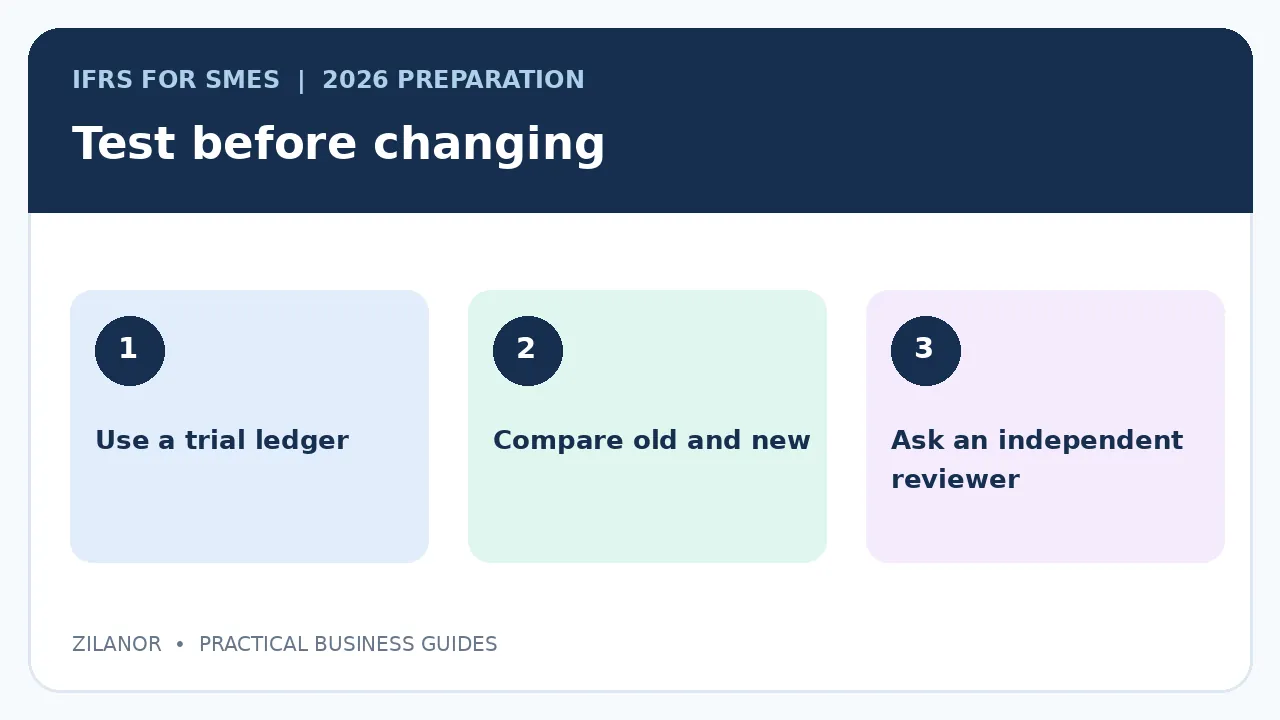
Choose ten to twenty records from the areas marked for review. Include easy cases and odd cases. For a retailer, that could mean a routine sale, a large return, an old asset and a loan with a fee. Ask the accountant to show the old and proposed treatment side by side. Note any change in the reported balance or profit.
Do not change last year’s signed accounts while testing. Work in a trial file. Review the sample with a second person. If the same issue appears in many records, estimate the effort needed for the full data set. If it affects only one case, write a clear rule for that case.
Quarter three: prepare people and reports
Once the key choices are clear, update work notes and report layouts. The bookkeeper needs plain steps, not a thick memo. Show one real example of how to code a transaction, what proof to keep and when to ask for help. Test that the new report matches the ledger totals.
Train the staff who create source records, too. A sales lead may need to record a contract start date. A buyer may need to save the terms of a new deal. Good entries at the start reduce fixes at year end. Keep training short and tied to actual tasks.
Quarter four: run a parallel review
Before the first required year, prepare a test report using the proposed approach where practical. Compare key lines with the old report and explain each large gap. An owner should be able to tell why a number changed. If they cannot, the team needs more review.
Ask the external adviser to check the draft disclosures and the change log. Save a list of open issues and their deadlines. Do not claim compliance until a qualified reviewer has checked the final accounts. The date of the international standard does not by itself prove the local effective date.
Know when new software is worth the cost
A small firm may be able to meet its needs with its current ledger plus a clean schedule. A larger firm may need more fields or report options. Start with the task: what must the tool calculate, store and show? Ask the vendor for a live demo using a made-up case that looks like your own. Do not pay for a broad upgrade just because a brochure mentions IFRS.
Test data export before signing. Can you take out records in a common file format? Can staff trace a total back to a source invoice? Does the tool keep who changed a figure and when? Does it let a reviewer lock closed periods? A low monthly price is of little use if the firm later pays to repair poor audit records.
Set a clear spending limit. Include setup time, staff work, outside advice, data clean-up and the full annual fee. Then compare that total with the cost of a simple manual process. For a firm with a short chart of accounts, the smaller plan may be best.
Common mistakes to avoid
One mistake is to copy a full-IFRS checklist into an SME project. The standards are not the same. Another is to rely on a vendor’s blog for legal adoption dates. A third is to let each team keep its own version of the change list. These errors lead to wasted effort or gaps in review.
Watch for false precision, too. An estimate is not proof. If the firm lacks a clear asset date or contract record, mark the data gap and find the source. Do not fill it with a guess just to make a worksheet look done. A good record of uncertainty is better than a neat but weak figure.

A simple meeting agenda for owners
Hold a half-hour meeting with the bookkeeper and adviser. Start with one question: which accounting rule must this entity use, and from when? Then review the five biggest account areas. Assign each open item to a named person and a due date. End by choosing one sample to test. This meeting can turn a vague concern into a clear plan.
At the next meeting, ask what changed in the sample, what did not change and what data was missing. Ask for the cost of the remaining work before approving new tools. Keep the tone calm. The point is to make good books, not to create a large project for its own sake.
Try a short book check before the next meeting
Use real records, not guesses
Pick one sale from last month. Find the bill. Find the bank entry. Check the date and the amount. Note who made the entry. Ask if the rule is clear. If not, write the gap. Do not change live books to test a new rule.
Now take one item of stock. Check the cost note. Check the count. Check where it sits in the books. Ask a second person to trace the same path. If both reach the same sum, keep the steps. If not, find the cause.
Try one loan too. Find the signed deal. Check the balance and the next due date. Look for fees. Make sure the cash plan and the ledger match. Ask the adviser what the new rule may change. Keep that answer in the work file.
End with one short list. Mark what is clear. Mark what needs proof. Give each gap an owner. Pick a due date. Take the list to the next call. This makes the change plan a set of real tasks.
What to take away
The 2025 IFRS for SMEs edition is a real standards update. Yet the best step for any business starts with local applicability, its current books and clear expert review. Use 2026 to check the scope, test real cases and train the people who enter data. A small, sound plan will do more than a rushed software change.
Source note: The issue date and effective date come from the official IFRS Foundation update. The Foundation also publishes support material. Seek advice on local adoption, financial reporting and tax effects.


