

Delegation for Small Business Owners: How to Hand Off Work Without Losing Quality in 2026
Do you have to sign off on each small task? Does your team wait for you to answer a basic question? This may feel safe at first. But it can slow down your firm. It can also make your work day far too full.
You can hand off some tasks with care. You do not have to give up all control. The key is to give clear work, set safe limits, and check the result. This guide shows how to do that in a small team.
Find the tasks that hold up your team
Look back at the last two weeks. What had to wait for you? Did a new order sit in a queue? Did a buyer wait for a basic reply? Did a team member need your yes to order low-cost stock?
Write each task on a list. Note how often it comes up. Note what may go wrong if it is late. You may find that a few small tasks take most of your time. Those are good ones to review first.
Sort tasks by risk
Some tasks are safe and easy to teach. Others need more care. A staff member may be able to book a normal visit. A large refund may need a manager. A legal deal may need an expert. Do not use the same rule for all work.
Make three groups. One is routine work. One needs some judgment. One has high risk. Start with a simple task from the first group. Keep high-risk work with the right person until you have a sound plan.
Explain what good work looks like
Do not just say “take care of the inbox.” Say which mail to answer, how fast to reply, and where to find the right rule. Show a good sample reply. Tell the new task owner what to do if the buyer has a case they have not seen before.
Ask the staff member to tell you the plan in their own words. That can show where your guide is not clear. If you need to explain a step twice, write it down. A clear note can save time later.

Set a clear limit
A shop may let staff give a small refund for a known fault. A larger case may go to the owner. A team lead may buy stock from a set list. A new supplier may need more checks. Set a limit that fits your cash, work, and local rules.
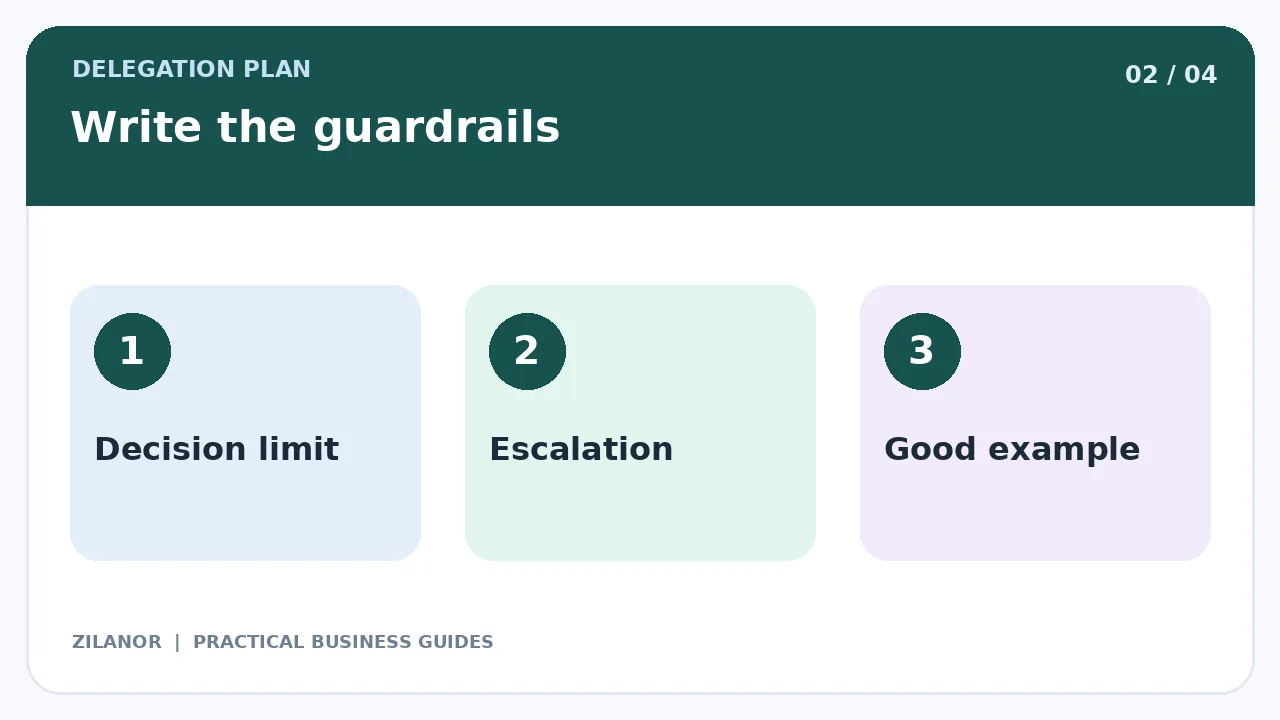
Put the limit in the task guide. Do not rely on staff to recall a rule from a chat. It should be easy to find. A clear limit helps people act with more trust and less fear.
Choose a safe first task
Start with work that repeats. It could be a weekly sales note, a stock check, or a standard call back. Pick one task, not ten. The staff member should have the right tools and time to learn.
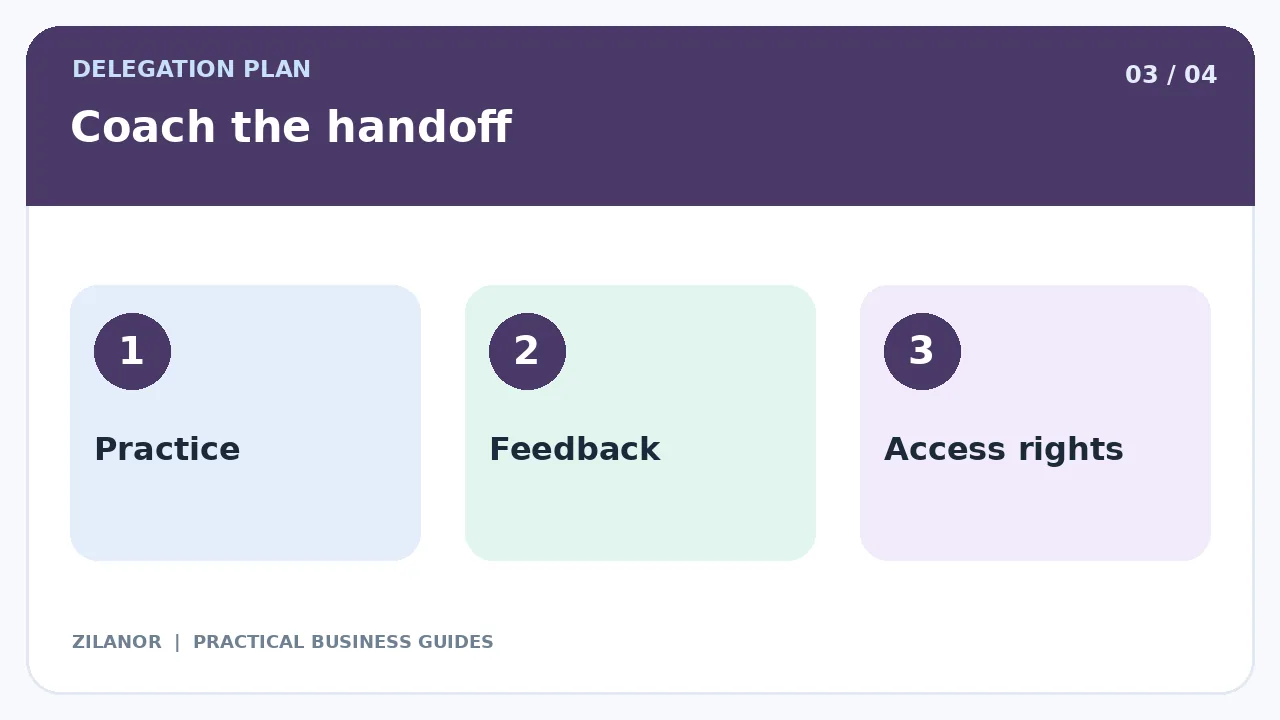
Show them how you do it once. Then let them try. Check their first few results and give clear notes. Do not take back the task due to one small error. Find out if the guide or tools caused the problem.
Write a one-page guide
A long manual is hard to use. Try one page first. Say when the task starts, what tool to use, the key steps, and how to tell if it is done. Add a short sample. Name the person who can help when a case is not in the guide.
Keep the guide up to date. If a shop changes its return rule, the guide must change too. Set a date to check it. Ask staff to flag steps that no longer fit the real work.
Give the right tool access
Each worker should have their own login. Give them the access needed for their task, no more. Do not share the owner’s main password. Turn on strong sign-in tools where you can. Review access when a worker moves to a new role or leaves the team.
One task may need a view of orders but no right to change bank data. A staff member may need to write a draft but not send it live. These limits can cut the harm from a mistake.
Make it safe to ask for help
Some new staff may fear they will look weak if they ask a question. Tell them when they should stop and ask. A buyer may want a rule break. A tool may show two prices. A safety risk may come up. Staff need a clear way to raise it.
Name a lead and a backup lead. If the first person is away, the task should not sit for days. Keep the path short. A small firm does not need a long chain of sign-offs for each case.
Review the result, not each click
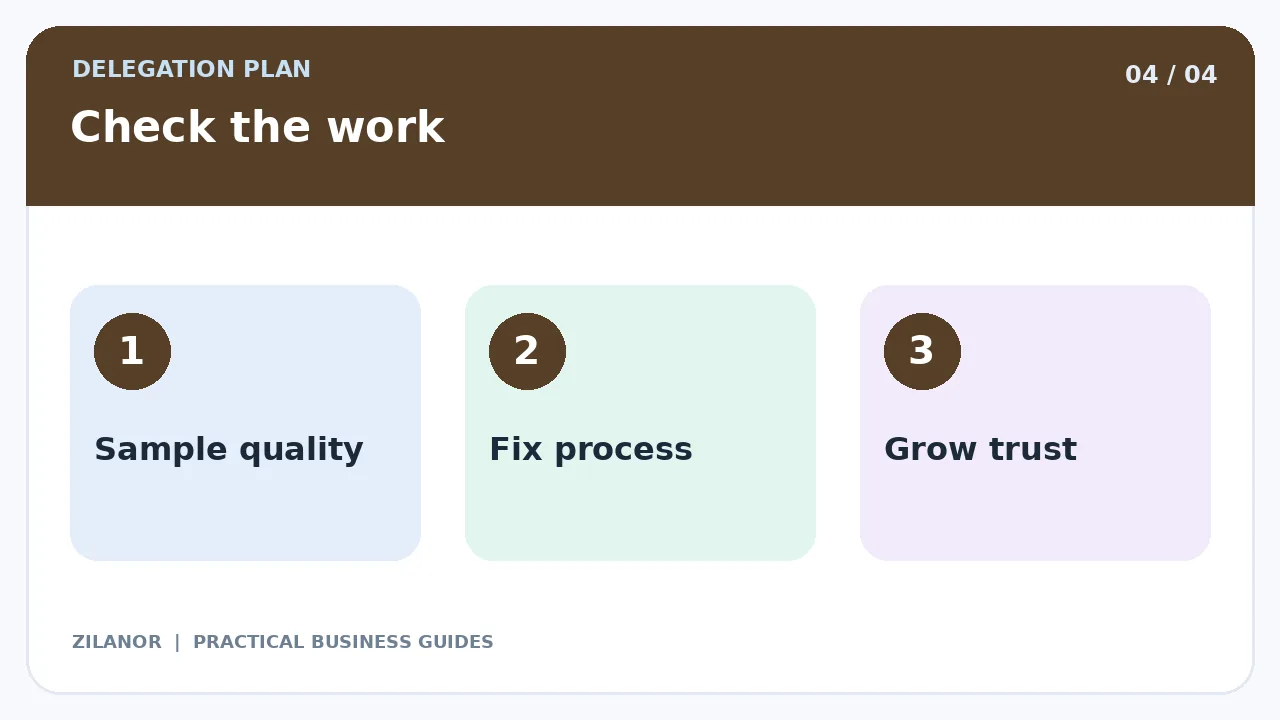
Choose a few signs of good work. For booking, look at missed slots and wrong dates. For replies, check whether the buyer got a clear and right answer. For stock, check late orders and avoidable rush fees.
Do not count speed alone. A fast task that must be done twice is not a win. Check some real cases. Talk about what worked and what did not. As staff gain skill, you can check less often.
When a mistake happens
First, fix the harm. Then ask why it went wrong. Was the task guide clear? Did the worker have the right facts? Was the limit too wide? Did the tool hide a key step? A fair review helps you fix the cause.
Staff still need to own their work. But blame on its own will not fix a bad process. Make a better guide and test it on the next task.
Make room for the owner’s key work
Time you save should go to work only you can do. You may need to plan a new service, talk with key buyers, or review cash needs. Put that work on your calendar. If you use all the free time to check small tasks, the old bottleneck will come back.
Do not hand off duties that need a legal right or expert skill. Tax, safety, and major legal matters may need a trained person. The goal is to share the right work in the right way.
Example: a small repair team
A repair firm has five staff. The owner sets each visit time and approves each basic quote. Buyers wait while the owner is out on a job. The team writes a guide for common jobs. It lists a safe price range and the cases that need the owner.
The office lead now books visits and sends normal quotes. The owner checks a few each night. One mistake shows that a travel fee rule is not clear. The team fixes the guide. Buyers get a faster reply, and the owner has more time for hard jobs.
A four-week plan
In week one, choose one routine task. Write the guide and set the limit. In week two, show the task and let the worker try it. In week three, let the person own it with a short check each day. In week four, check the results and ask what needs to change.
Do not rush the next handoff. Make sure the first task works well. Then choose another one. Small steady gains can be safer than a large change in one day.
Quick checklist
- Pick one repeat task with low risk.
- Set a clear result and safe limit.
- Give the right tools and a sample.
- Let staff ask for help.
- Check the work and fix weak steps.
Common questions
What if my staff use a new method?
That can be fine if the result is safe and right. Keep fixed steps where law or safety rules need them.
How much should I check?
Check more at first. Check less as skill grows. Match the checks to the risk of the task.
Can a two-person firm do this?
Yes. A clear split of work can help even a small team. Write down key steps so one person can cover for the other.
Sources
See SBA guides for small firms. For safe tool access, see FTC cyber tips. Check local work rules for your team.



Pingback: Internet Outage Business Continuity Plan for 2026
Pingback: Seasonal Staffing Plan for Small Businesses
Pingback: Remote Employee Onboarding: 30-Day Plan for 2026