
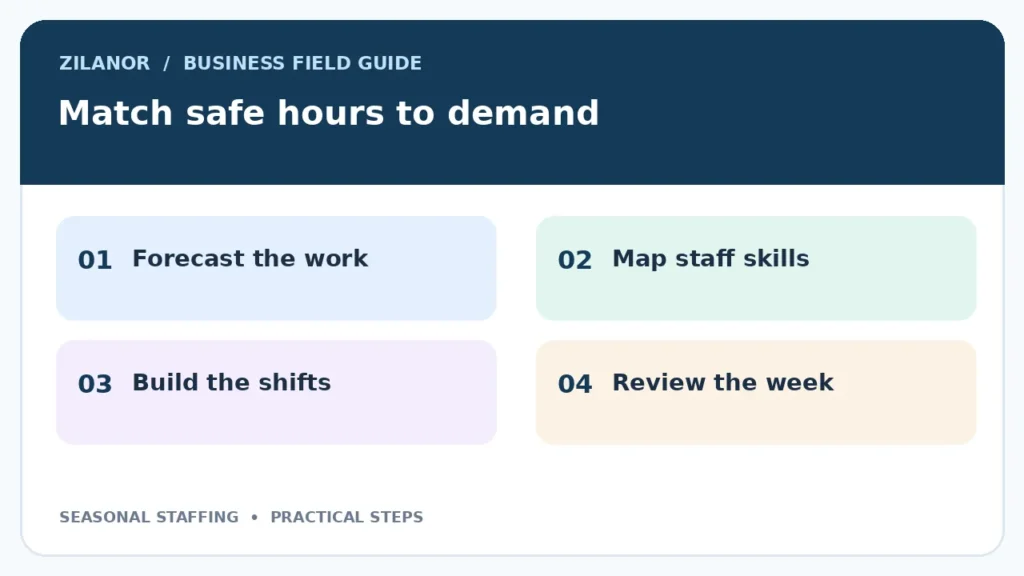

Seasonal Staffing Plan for Small Businesses: Match Hours to Real Demand
A small shop may be quiet for weeks, then face a rush of orders. Hiring too early can drain cash. Hiring too late can leave staff tired and buyers waiting. A seasonal staffing plan helps the owner make a better choice before the busy period starts.
This guide uses a simple demand forecast, role map and weekly check. It suits shops, event firms, hospitality teams and online sellers. Labour rules, working hours, pay and contracts vary by country. Check local law and get HR advice before you hire or change shifts.
Look at past demand, not just last year’s peak
Build a week-by-week view
Collect sales, bookings or orders from the last one or two busy periods if you have them. Group the data by week. Note school breaks, public holidays, big local events and any promotions that may have changed demand. A one-day record can mislead when the next season looks different.
If the business is new, use a cautious plan. Ask suppliers, hosts or local groups about typical patterns, but treat their view as a clue rather than a forecast. Test with a small team and watch real orders closely. Do not hire a large group based only on a social media spike.
A gift shop may sell far more in the weeks before a holiday. The owner should look at daily transactions, not only total revenue. A few large orders may raise sales without raising the number of customers needing help at the counter.

Turn demand into work hours
Measure tasks, not just sales
Choose the tasks that take staff time. For an online store, they may be picking, packing, support and returns. For a café, they may be serving, cleaning, prep and stock work. Estimate how many minutes a normal task takes when the team has the right tools.
Do a short time study with a real sample. Ask staff to help and explain the purpose. Do not use it to punish a person for one slow shift. Note when a task is unusual, such as a custom order or a large delivery. The goal is a fair planning estimate.
If an average pack takes five minutes and the firm expects 120 packs in a day, the direct packing work is about ten staff hours. Add time for breaks, setup, checks and exceptions. A plan based on pure task time will be too tight.
Map roles before you count people
Know who can safely do each job
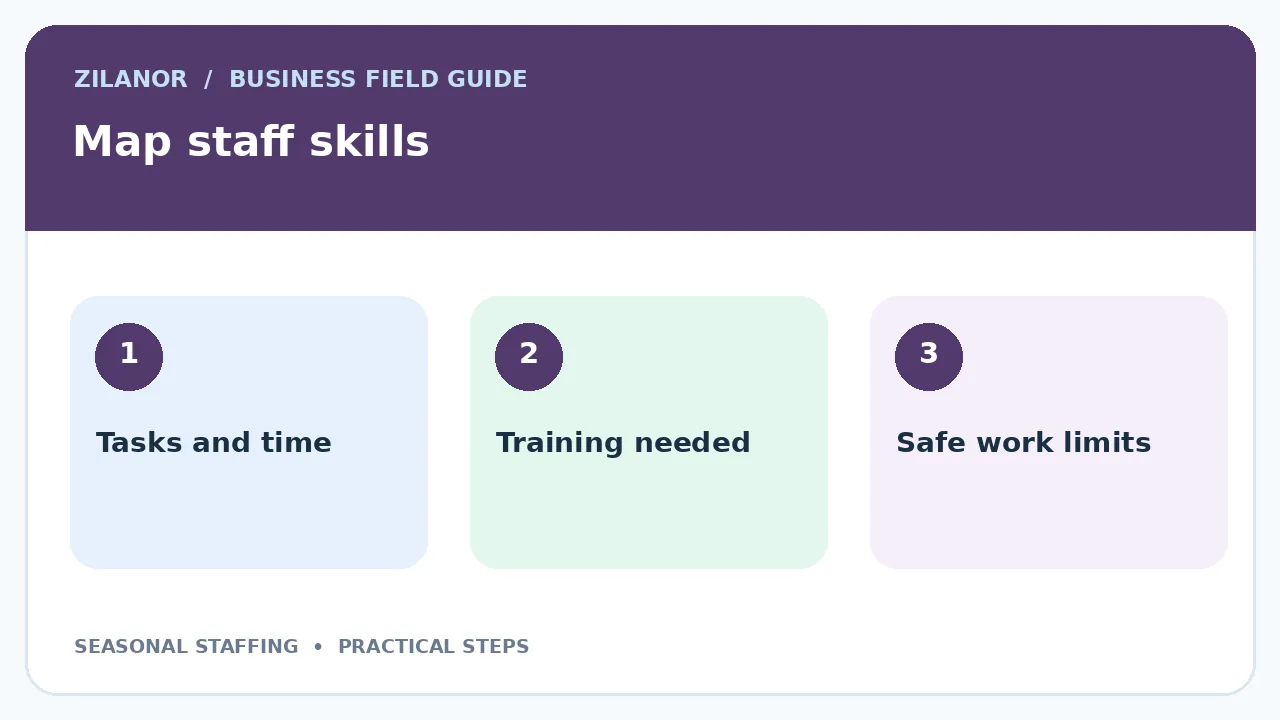
Write down the skills needed for the busy period. Some tasks can be taught in a day. Others need a licence, safe handling training or a skilled lead. Make a small role map that shows who can work alone and who needs a supervisor.
Do not use temporary staff for high-risk work without the right training. A food firm must follow safe handling rules. A workshop may need trained machine users. A small support team may need rules on private client data. The cost of a mistake can be greater than the cost of a slower start.
A good plan gives each new worker a first-day task and a named person to ask for help. This is not the same as a full thirty-day remote onboarding plan. Seasonal work needs a short, safe route to a defined role.
Build three demand cases
Plan for low, base and high weeks
Make a low case if demand is weaker than expected, a base case from the best evidence you have and a high case for a safe peak. Set the work hours needed in each case. This helps the owner choose which shifts are fixed and which can be added if demand appears.
Do not call a high case certain just because the firm hopes for it. Mark the assumptions. A large promotion or new client may add demand, but it may also be delayed. Review each case every week as orders come in.
Keep a cash view beside the hour plan. More staff may help deliver orders, but the firm must still pay wages before all customers pay. Set a wage budget and a safe buffer. Do not fill every possible shift in the first week.
Choose a mix of staff carefully
Balance skills, time and cost
Existing staff know the work but can burn out if given too many extra hours. New seasonal staff need training and support. A specialist contractor may help with one peak task, but may cost more per hour. Compare the full cost of each option, including setup and oversight.
Check local rules on temporary work, overtime, rest, leave and worker status. Do not assume a contractor label changes the legal rights of the person doing the work. Use clear written terms and fair pay. Respect safety and the real limits of each worker.
Give experienced staff time to coach new people. If the best worker spends all day fixing errors, the plan has not gained much capacity. Count training hours in the first weeks.
Make the rota easy to understand
Show cover for the busiest hours
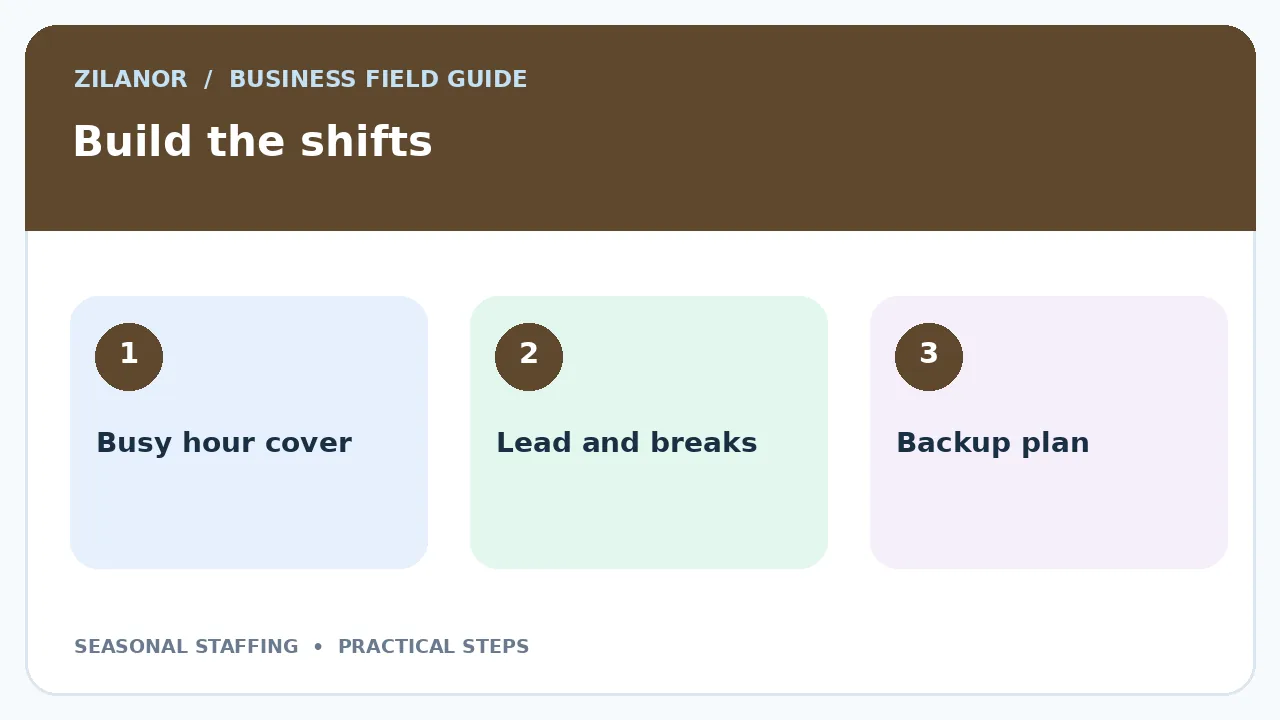
Build shifts around the hours when work arrives. A shop may need more people in late afternoon, while an online seller may need a morning pack team. Use past order timestamps and a few observations. Do not make every day look the same when demand is uneven.
Give each shift a lead and a clear break plan. Staff need to know how to report an absence and whom to call. Keep the rota where everyone can see the current version. Avoid sending five different copies by chat.
Try the rota on a normal busy day before the peak. Watch queue length, waiting orders and staff feedback. Move hours where they help most. A short test can catch a weak plan before the high season.
Train for the errors that hurt most
Use short work guides
Choose three common mistakes to prevent. A retail team may need correct refunds, safe cash handling and stock lookup. A kitchen may need allergy steps, food dates and cleaning. Write each guide in plain words with one good example.
Let new staff watch the task, practise it and get feedback. Do not make them read a long manual in place of a safe demo. Ask them to say when they are not sure. A work culture that welcomes questions can prevent avoidable harm.
Set a stop rule for high-risk cases. A new worker should know when to call a lead instead of guessing. This keeps service steady without giving staff authority they have not been trained to use.

Watch the week as it happens
Use a few leading signs
Track orders waiting, queue time, work left at close and staff hours used. Read a sample of quality issues as well. Fast work is not a win if many orders are wrong or customers must return. Review the numbers with the team in a short meeting.
Use a trigger for extra cover. For example, if open orders stay above the safe level for two days and the cash budget allows it, add a planned shift. If demand falls, reduce future optional hours in line with contracts and law. Do not change a worker’s agreed terms without the right process.
Keep the plan calm. A single rush hour does not need a permanent hire. Look for a pattern across days and note any event that changed demand.
Prepare for sick days and supply gaps
Keep a backup, not a heroic assumption
List staff who can cover each key role with the right skill. Do not assume everyone can do every task. Give each lead a way to contact the backup in line with privacy and work rules. A small firm may also need a partner for excess orders.
Supply delays can change the staffing need. A store with no stock to pack may need fewer pickers but more support for buyer updates. Review the task list when goods are delayed. Do not pay people to wait on a plan that no longer fits the day.
Build a short plan for sudden demand. It might include pausing a promotion, changing a delivery promise or using a safe external service. Make only promises the firm can keep.
Review staff experience after the peak
Use the season to improve the next one
Ask staff which shifts felt too tight and which tasks took longer than planned. Compare forecast orders with real orders. Note the cost of training, mistakes, overtime and unused hours. Do not judge the whole plan from wage cost alone.
Thank staff for specific work and give fair feedback. If the firm hopes to rehire seasonal workers, ask whether they would return and what would make the work better. A good team can reduce training cost next year, but the relationship needs care.
Save the final schedule and the lessons in one place. The next owner should know why the plan changed. A record of what worked is more useful than trying to recall a hectic month a year later.
First step this week
Choose the busiest expected four weeks. Estimate orders by week and turn them into task hours. Add training, breaks and a cash limit. Build low, base and high cases. Then ask one worker to check whether the plan fits real work.
Seasonal staffing is not a guess at how many people to hire. It is a way to match safe work hours to demand that may change. A small, tested plan can help the team serve buyers without burning through cash or staff energy.